At a glance
- Of the prettiest villages on the Costa Brava, the easiest to visit from Palamós are Pals, Peratallada, Monells and Ullastret inland, and Calella de Palafrugell, Begur, Tossa de Mar and Cadaqués on the coast.
- Pals is 15 km from Camping King's and Peratallada 21 km. Add Monells and you have a one-day route of about 62 km.
- Calella de Palafrugell is 11 km by car, and you can also walk there along the Camí de Ronda.
- In summer it’s best to go early: by mid-morning parking is difficult and the streets fill up.
- In 2027, the campsite is open from 25 March to 12 September.
The prettiest villages on the Costa Brava at a glance
A few kilometres inland, in the Baix Empordà, there are stone villages of medieval origin. On the coast, you’ll find old fishing quarters with white houses and boats on the sand. Camping King's is in La Fosca (Palamós), between the two, and most of the villages are half an hour’s drive away or less. This table lists them by distance:
| Village | Distance | By car | What to see |
|---|---|---|---|
| Calella de Palafrugell and Llafranc | 11 km | 15 min | Boats, coves and arcades |
| Pals | 15 km | 16 min | Gothic quarter and views |
| Begur | 17 km | 21 min | Castle and indiano houses |
| Peratallada | 21 km | 23 min | Rock-cut moat |
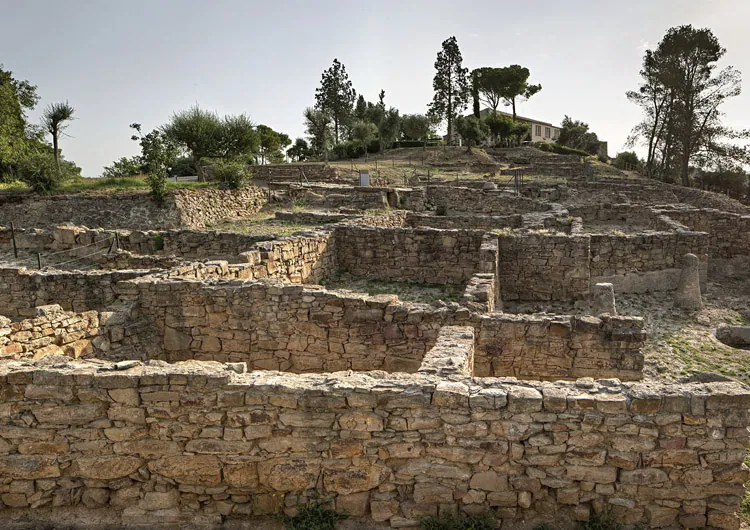
| Ullastret | 22 km | 24 min | Iberian settlement |
| Monells | 25 km | 30 min | Arcaded square |
| Tossa de Mar | 45 km | 40-50 min | Walled Vila Vella |
| Cadaqués | 80 km | 1 h 25 min | White houses and Portlligat |
If you only have one day, the easiest combination is Pals, Peratallada and Monells, and we’ve set out the route below. If you’d rather head for the sea, Calella de Palafrugell is a quarter of an hour away.
Medieval villages on the Costa Brava: Pals, Peratallada, Monells and Ullastret
The most visited medieval villages on the Costa Brava lie on the Baix Empordà plain, north of Palamós. The Costa Brava tourist board has a guide to medieval villages covering about twenty of them, spread across the province. These four are the closest to the campsite.
What to see in Pals: the Gothic quarter and the Torre de les Hores
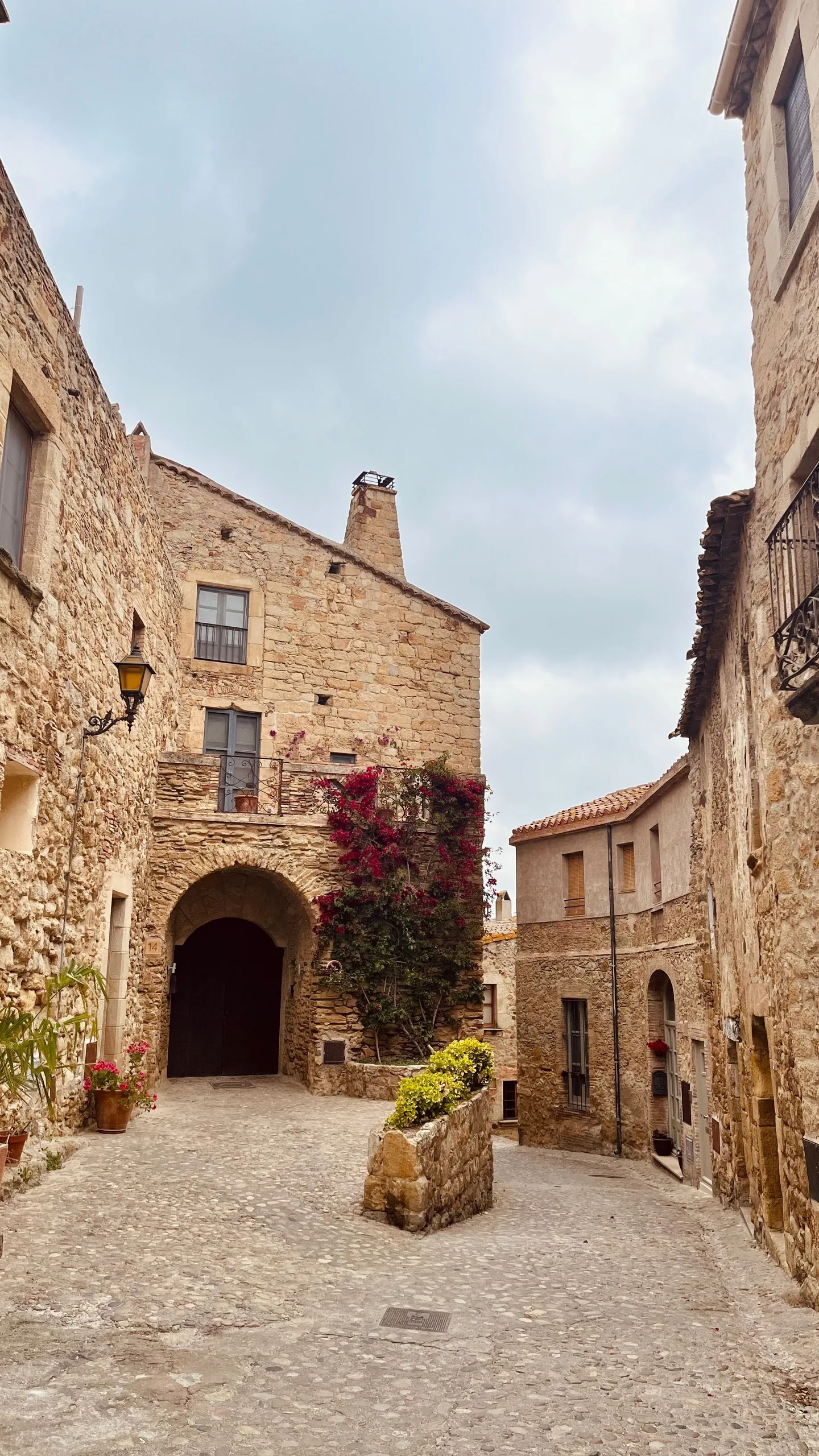
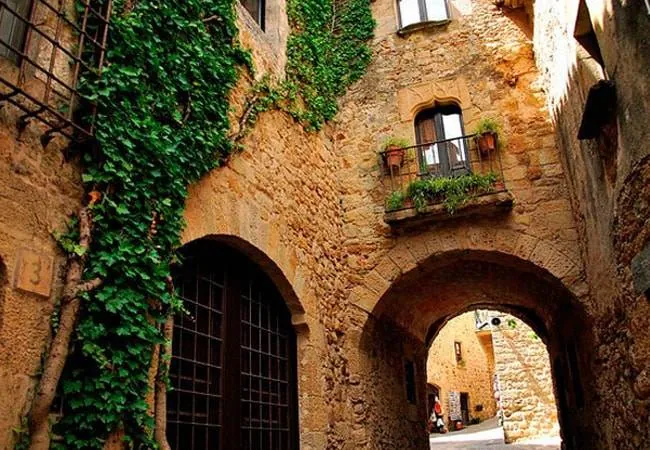
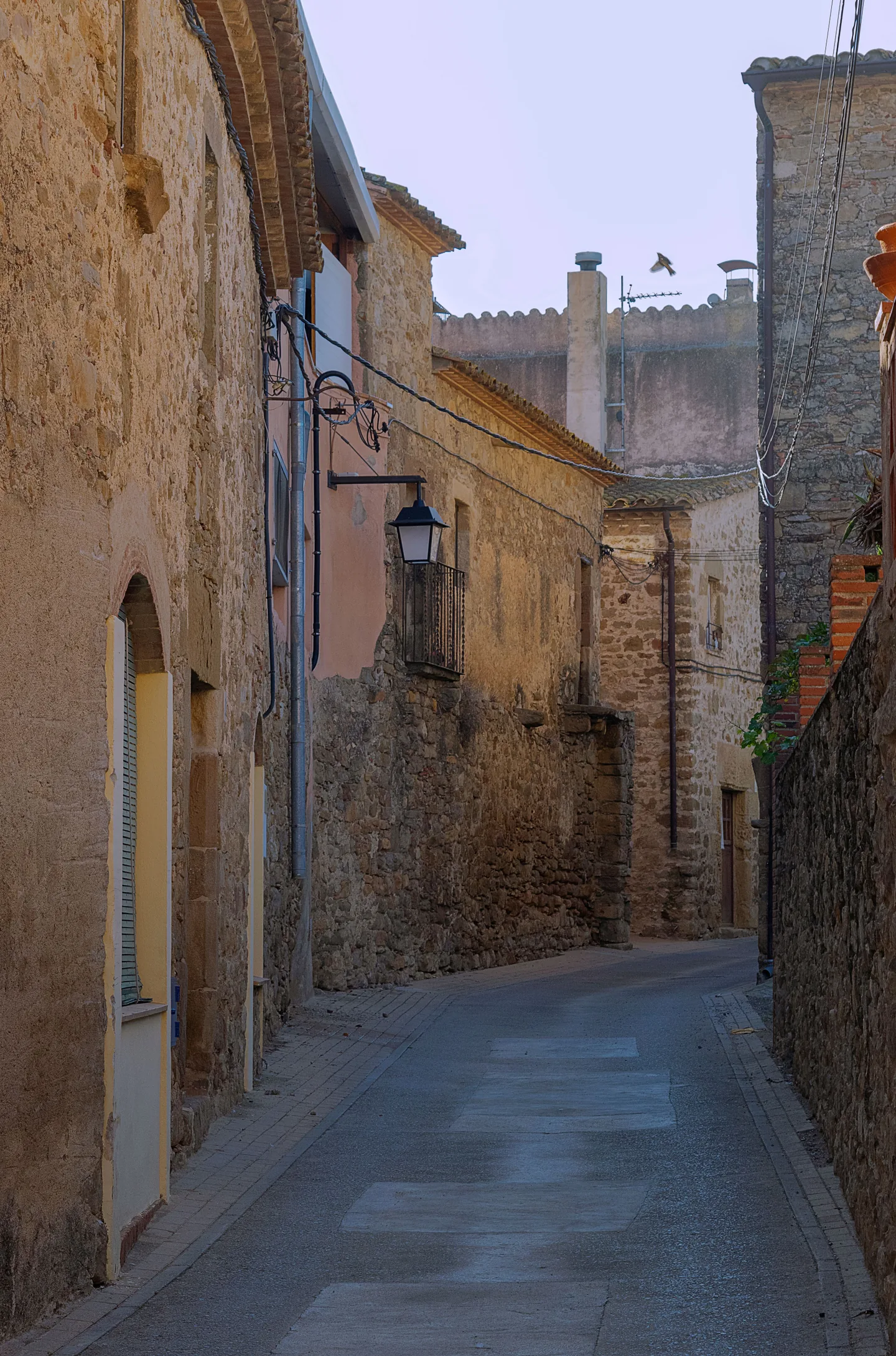
Pals sits on a hill 15 km from the campsite. Its old town, the Gothic quarter, is all cobbled streets, round arches and pointed windows. You can start at Ca la Pruna, a fortified house from the 15th and 16th centuries that’s now the cultural centre. From there, information boards explain each stop along the way.
The Romanesque Torre de les Hores, from the 11th and 12th centuries, is what remains of the castle, which was pulled down in the 15th century. The stones were used to rebuild the church of Sant Pere, and the tower gets its name, the Tower of the Hours, from the Gothic belfry added later. Follow the town walls and you reach the Josep Pla viewpoint, which looks out over the Montgrí massif and the Medes Islands. Pla, the writer it’s named after, used to say that Pals deserves not one visit but a hundred.
The rice sold under the “Arroz de Pals” brand is grown in the fields around the village.
What to see in Peratallada: the moat, the castle and Les Voltes square
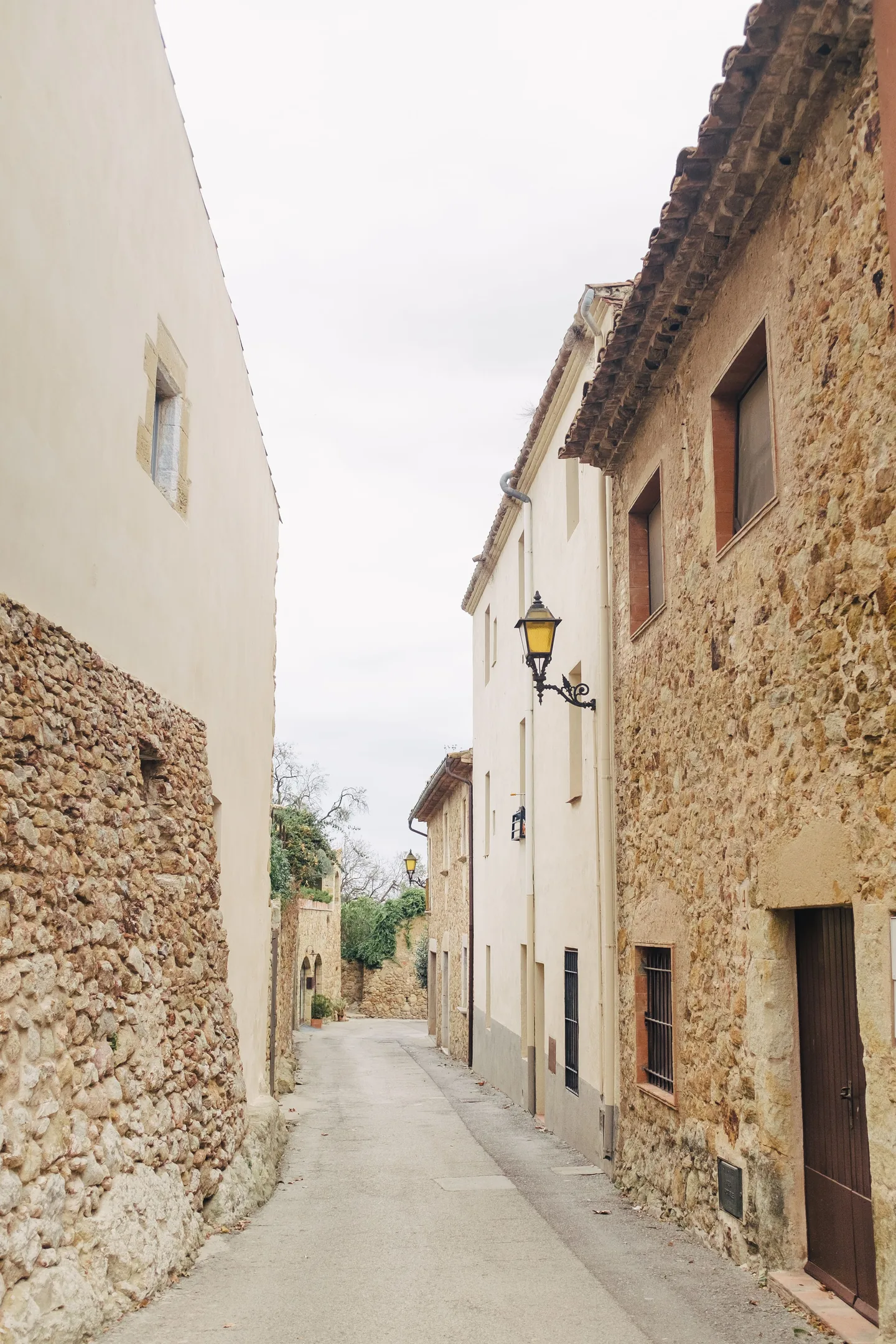
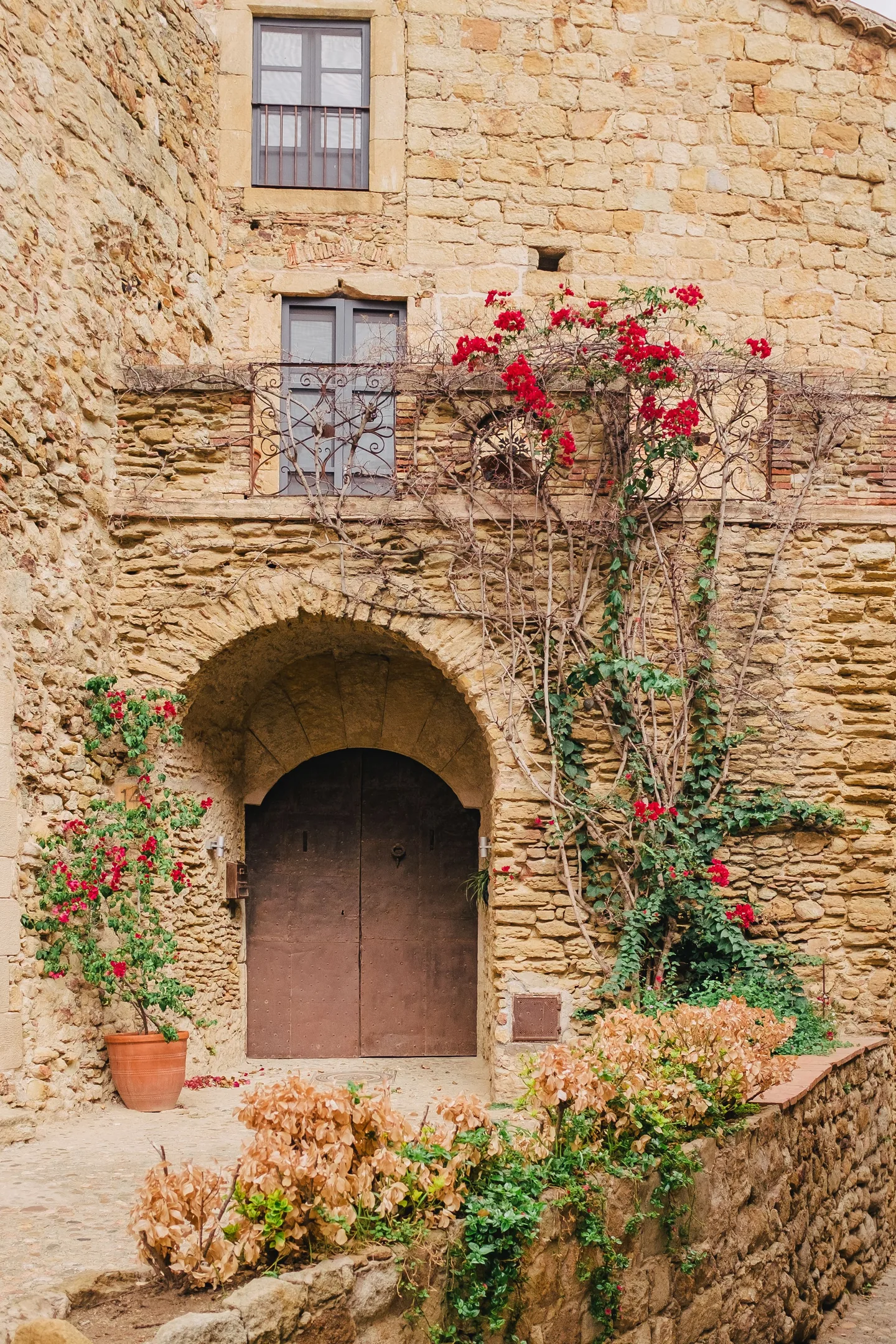
Peratallada is 21 km from the campsite and 8 km from Pals. It’s a listed historic site and one of the best-preserved medieval villages in Catalonia. The name means “cut stone”, and you’ll see why as soon as you reach the moat: it’s dug out of the rock and in places is between 7 and 8 metres deep.
The castle has been documented since at least 1065. It’s privately owned, so you can only see it and its keep from the outside. Village life centres on Les Voltes square, with its arcades and café terraces. The church of Sant Esteve stands outside the walls. In 2023, National Geographic included Peratallada among the most beautiful medieval villages in Spain.
Monells and its arcaded square
At the foot of the Gavarres massif, 25 km from the campsite, Monells is smaller and quieter, with about 180 residents. Everything revolves around the main square and its arcades. It may look familiar if you’ve seen the Spanish comedy Ocho apellidos catalanes (Spanish Affair 2), because part of the film was shot here.
The village’s old grain measure is still in the square. In 1234, King James I ruled that, together with the one in Girona, it should be used as the reference for setting grain prices across the whole diocese.
Ullastret: medieval streets and an Iberian settlement
Ullastret is 22 km from the campsite and 5 km from Peratallada. The village has an old town of narrow streets, and on the outskirts is the Ullastret Iberian Settlement, the largest Iberian site discovered in Catalonia and one of the branches of the Archaeology Museum of Catalonia. It’s open from Tuesday to Sunday, but check the times before you go.
A one-day route through the medieval villages of the Empordà
You can see Pals, Peratallada and Monells in a day without rushing. From the campsite it’s about 62 kilometres in all and just over an hour and a quarter at the wheel. Here’s an order that works:
- In the morning, Pals (15 km). If you get there early, parking will be easier and you’ll have the streets almost to yourselves.
- At midday, Peratallada (8 km, about 12 minutes). The moat, Les Voltes square and a terrace for lunch.
- In the afternoon, Monells (13 km, about 20 minutes), where there are fewer people.
- Back to the campsite (26 km, about half an hour), in time for a swim at La Fosca if it’s summer.
Tip: if you’re interested in archaeology, swap Monells for Ullastret, which is 5 km from Peratallada and has the Iberian settlement.
Pretty coastal towns: Calella, Begur, Tossa and Cadaqués
Calella de Palafrugell and Llafranc
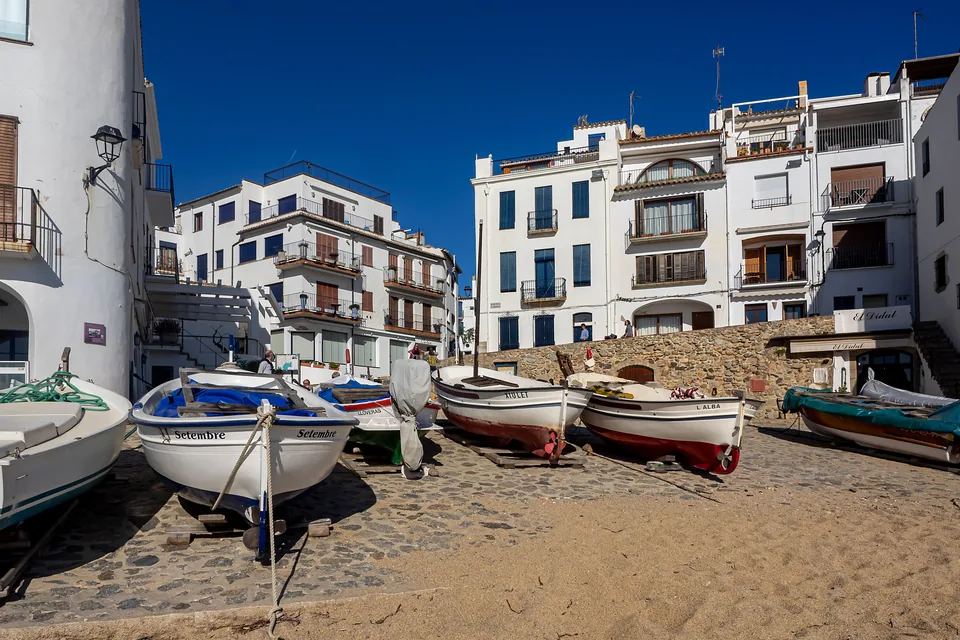
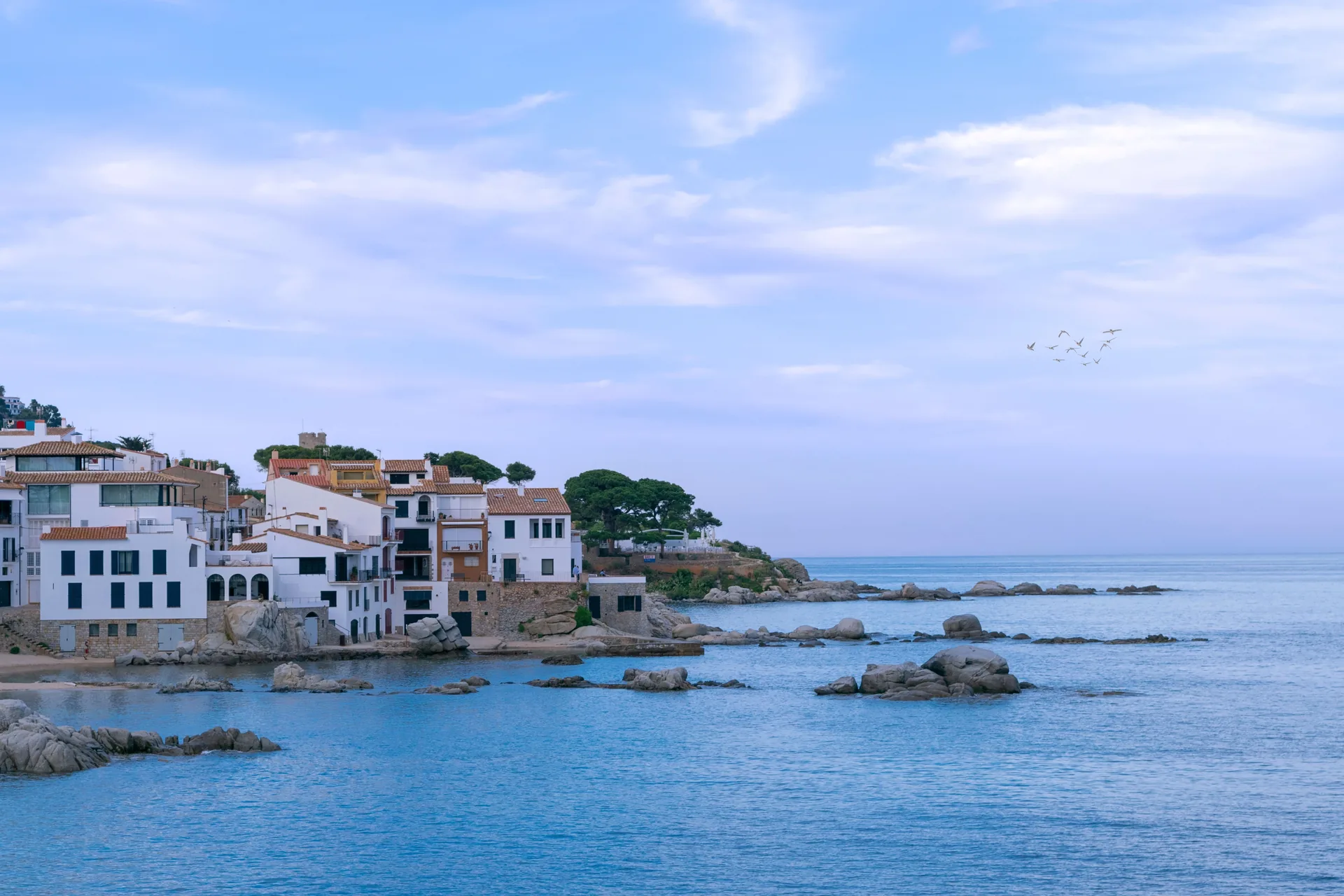
Calella de Palafrugell is 11 km away. It began life in the mid-18th century, when fishermen from Palafrugell moved to the coast as the threat from pirates eased, and it has kept its white houses, the boats on the sand at Port Bo and Les Voltes, the arcades by the sea. Every summer, its Cantada d'Havaneres, a concert of habaneras (sailors’ songs), draws thousands of people to the beach.
Llafranc is right next door, about 2 km away. And if you feel like walking, you can reach Calella from the campsite along the Camí de Ronda coastal path: about 7 or 8 kilometres beside the sea.
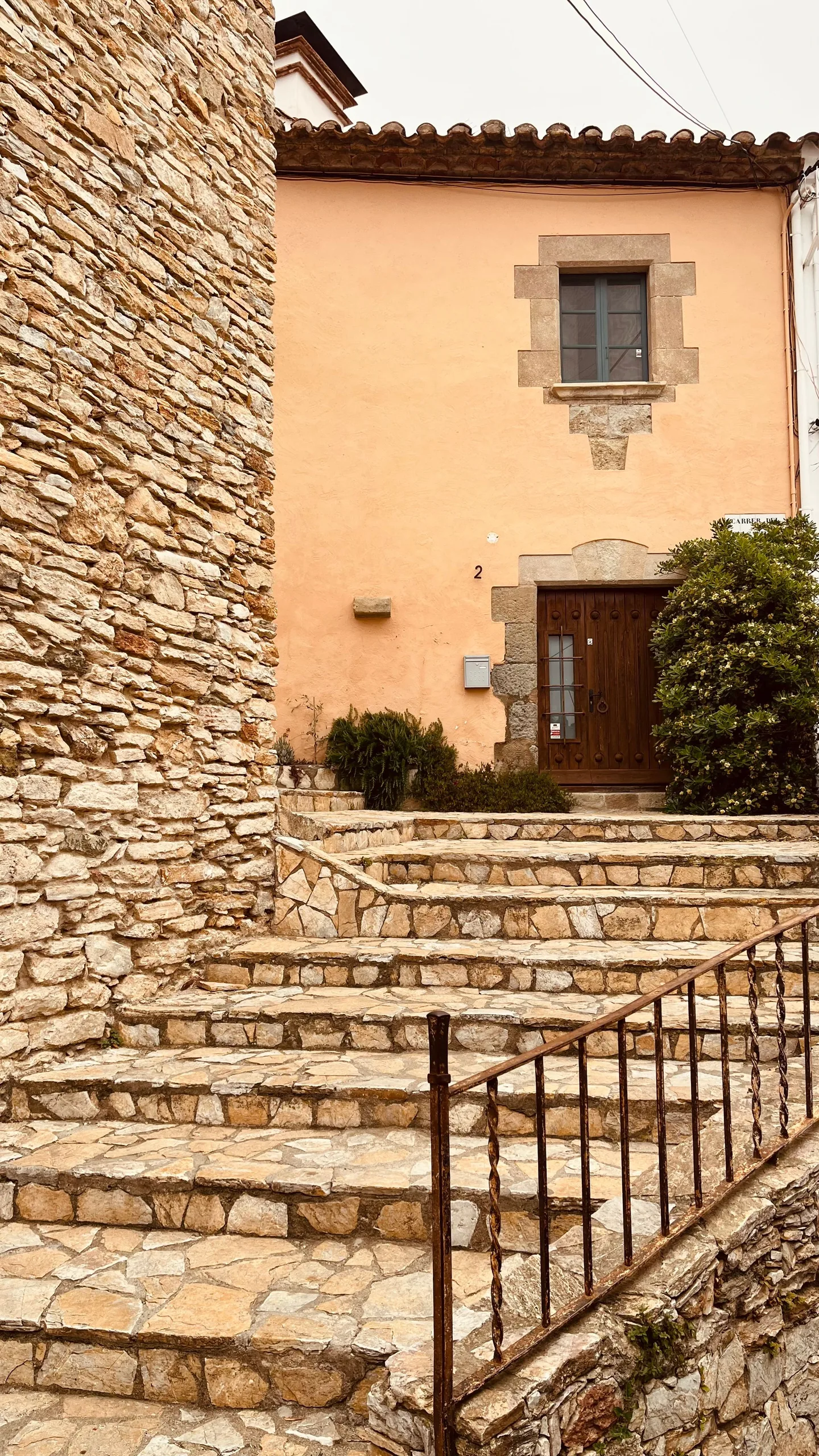
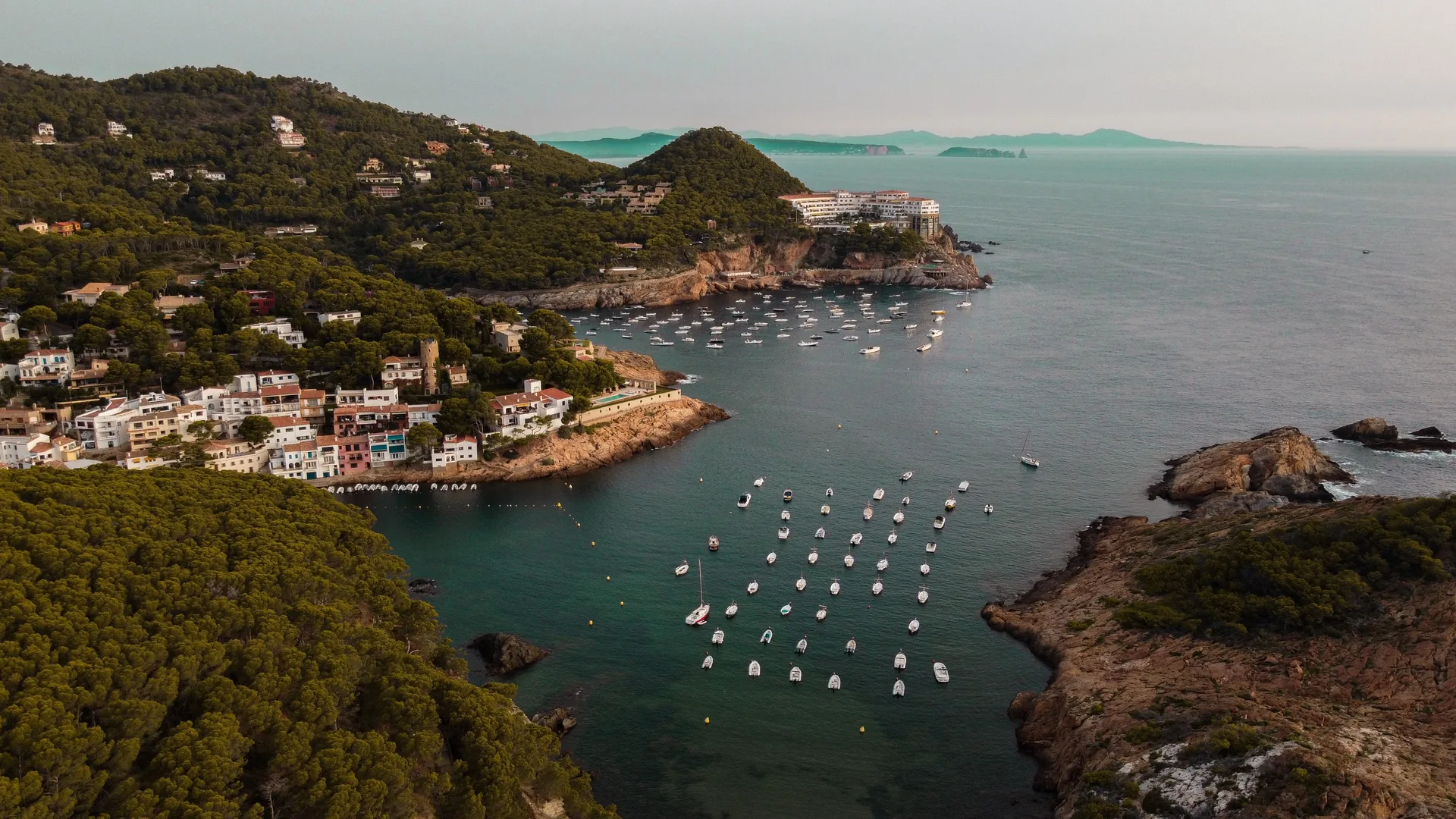
What to see in Begur: the castle, indiano houses and coves
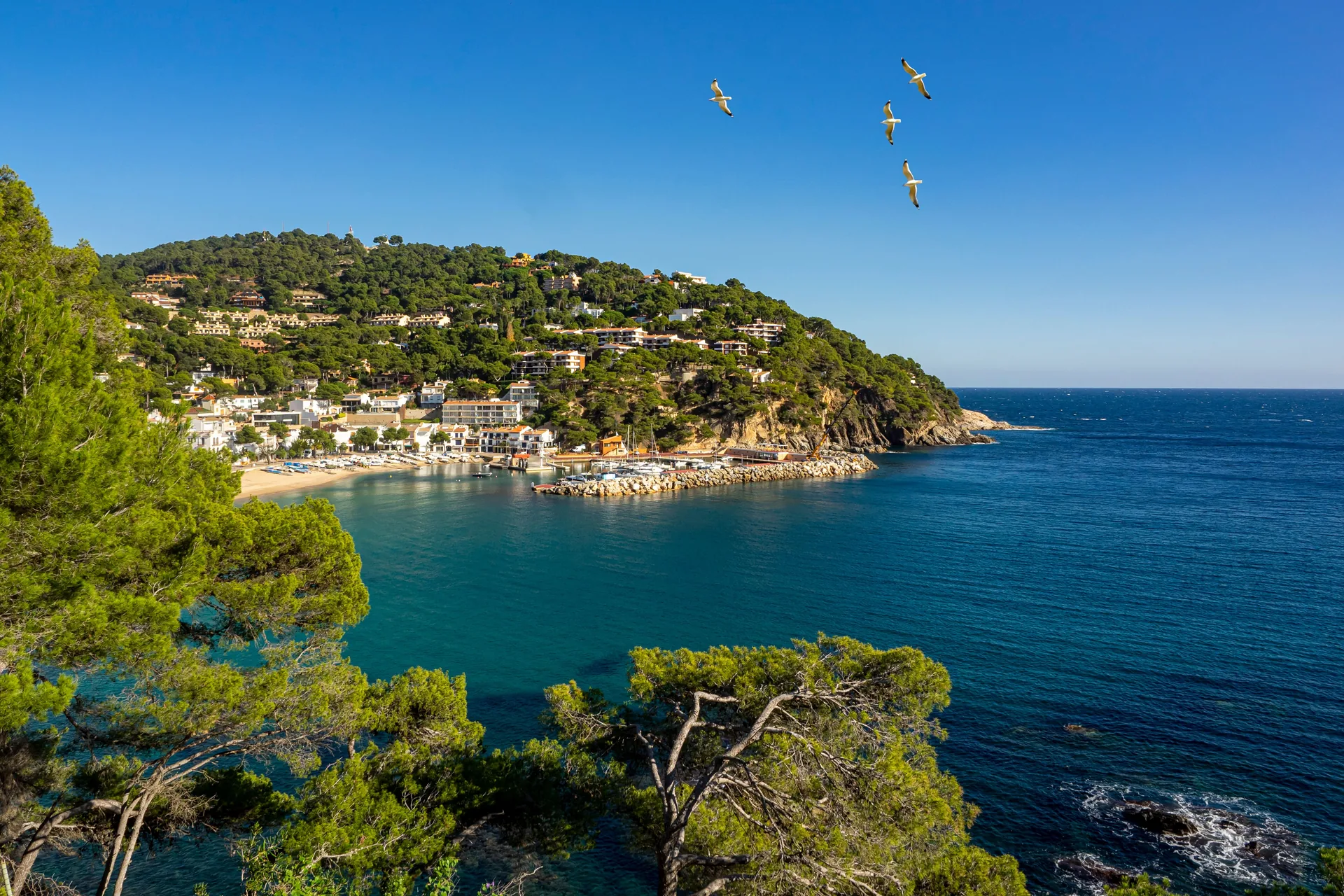
Begur is 17 km away, high up on a hill with its castle at the top. Five defensive towers were built against pirate raids between the 16th and 17th centuries, and the houses of the indianos are still standing in the village. These were locals who crossed the Atlantic to make their fortune, mostly in Cuba, and came back with money.
Heading down to the sea, you’ll find Sa Riera, Aiguafreda, Sa Tuna, Fornells and Aiguablava, some of the best-known coves on the Costa Brava.
Tossa de Mar and the Vila Vella
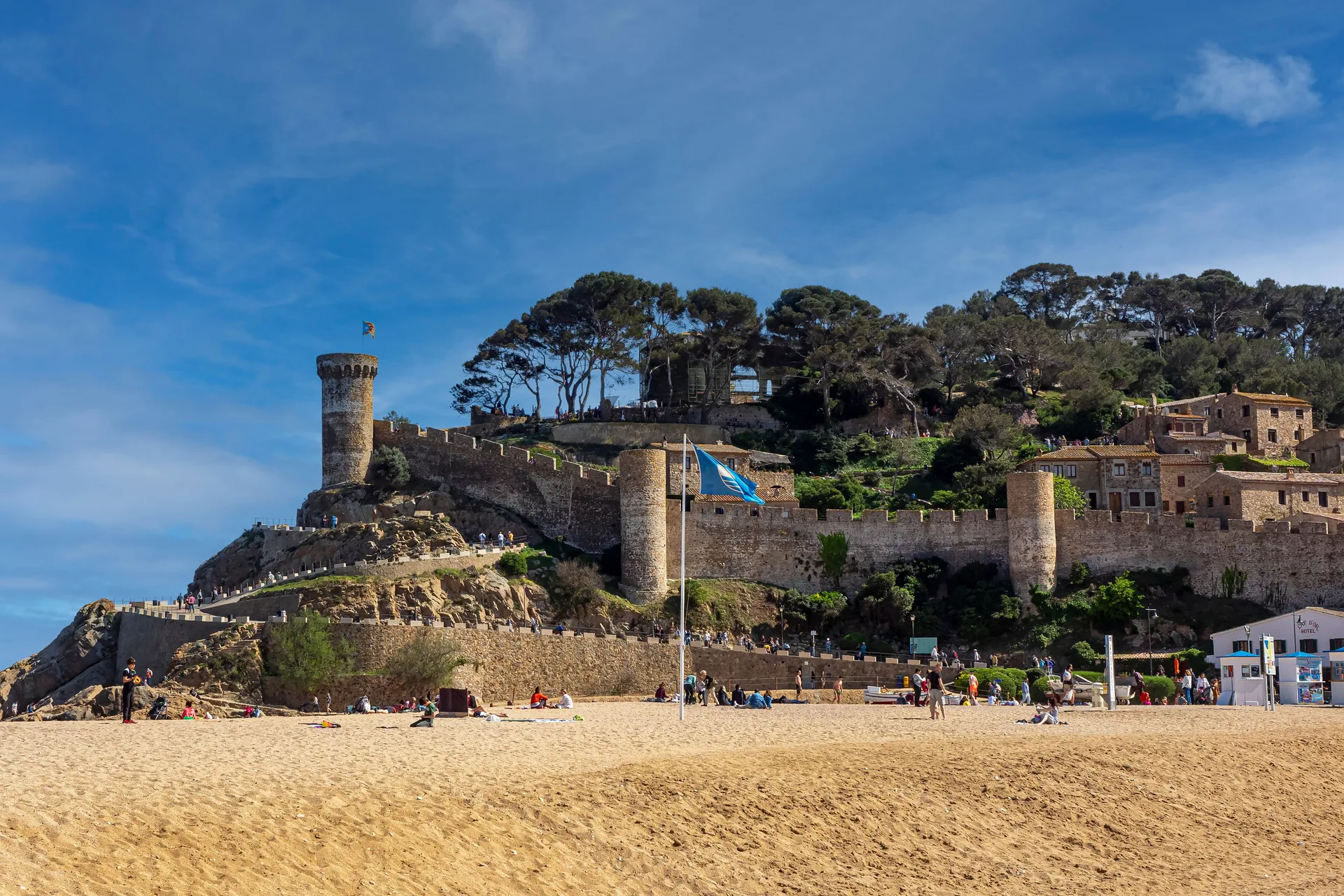
Tossa de Mar is 45 km away and has the only fortified medieval town still standing on the Catalan coast: the Vila Vella, with walls built between the 12th and 14th centuries and three large cylindrical towers. Inside, you can walk up to the lighthouse, and the municipal museum is there too. Marc Chagall spent the summers of 1933 and 1934 in Tossa and called it a “blue paradise”.
Cadaqués, its white houses and Dalí’s house
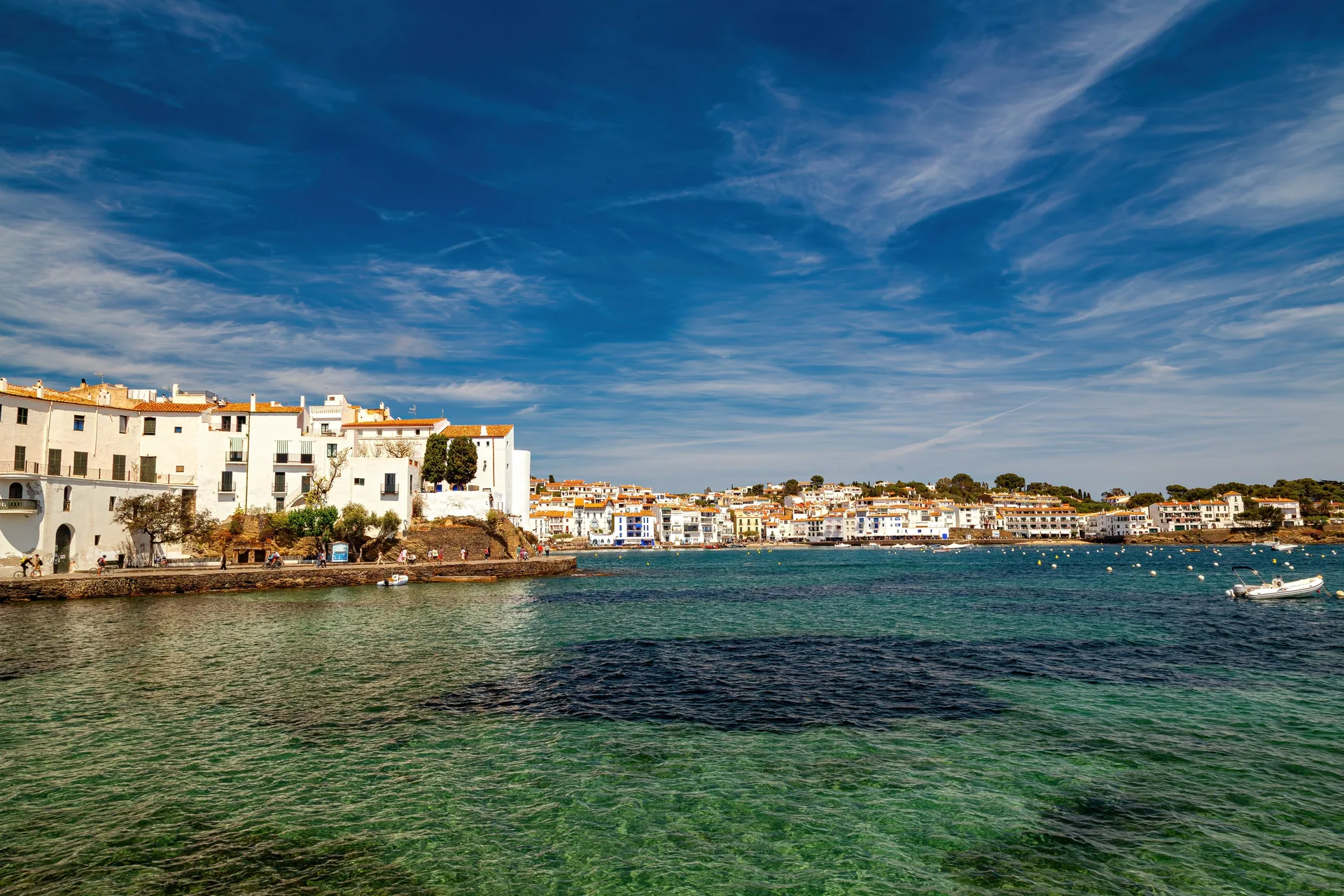
Cadaqués is the longest trip on the list: 80 km, nearly an hour and a half by car, with the last stretch along a twisting mountain road. It’s a fishing village of white houses, with the church of Santa Maria at the top of the old town. Next door, in Portlligat, is the house where Salvador Dalí lived for forty years. To see the House-Museum, you need to book in advance. In summer, parking in the village is tricky.
If you have an extra day: Besalú and Girona
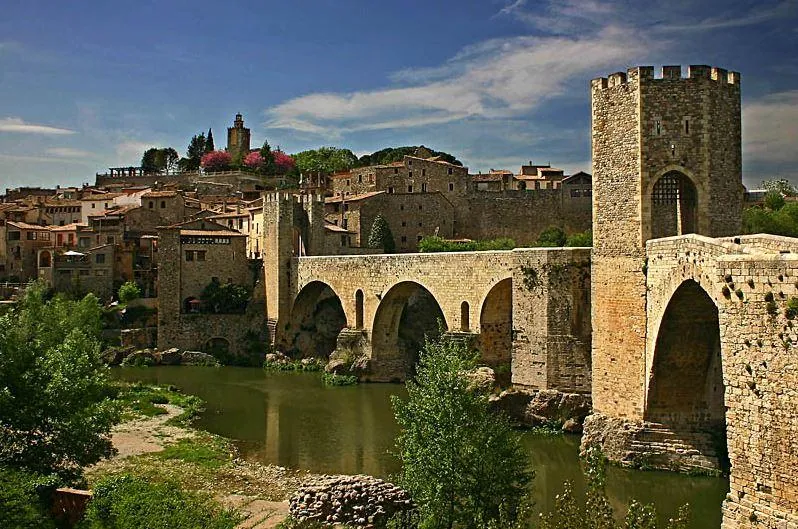
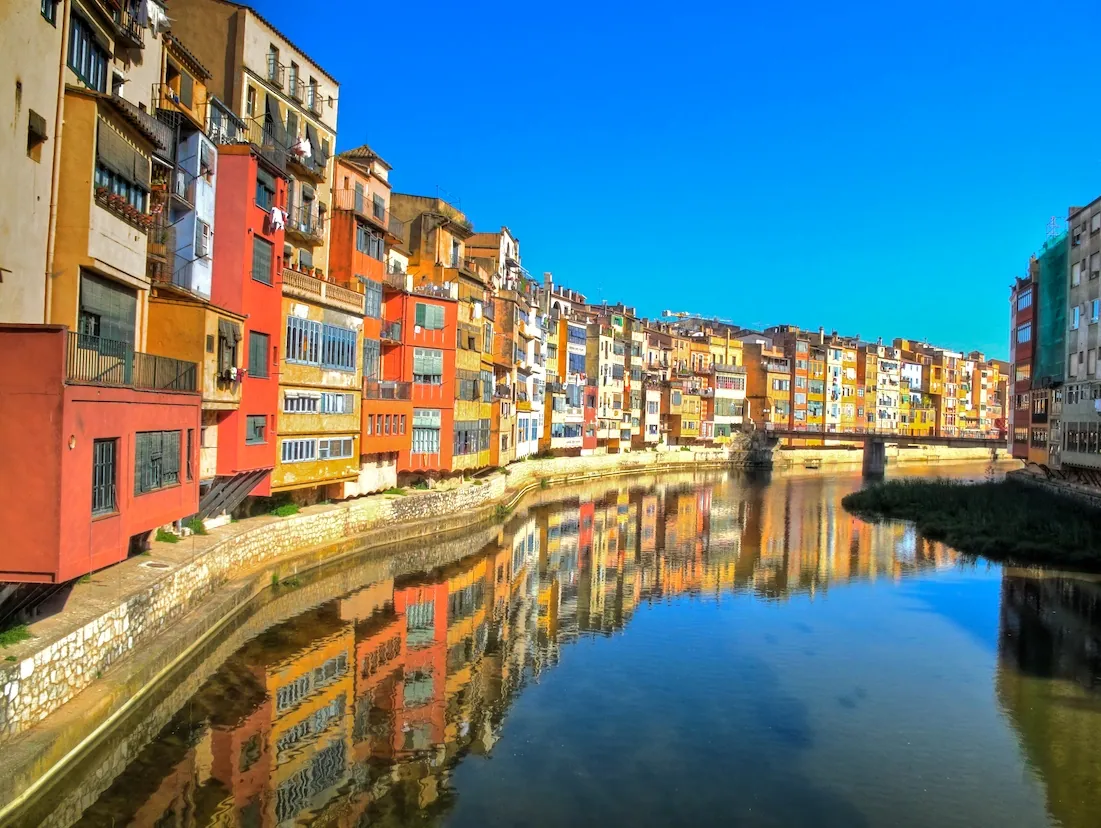
Besalú, 67 km away, is famous for its medieval bridge over the River Fluvià, its old Jewish quarter and the mikveh. Girona, 47 km away, has the Cathedral of Saint Mary, the Jewish quarter, the colourful houses along the River Onyar and the Arab baths. You can see both in one trip if you set off early.
Tips for visiting Costa Brava towns and villages
- If you’re looking for less crowded villages on the Costa Brava, put Monells and Ullastret on your list. Pals, Peratallada and Calella tend to fill up in summer and on public holidays.
- In July and August, go early or late in the afternoon. By mid-morning it’s hard to find a parking space.
- Leave the car outside the old town. Peratallada has three car parks outside the walls: in 2026 they charged at Easter and in summer, with the first half hour free.
- Wear comfortable shoes, as almost everywhere is cobbled.
- Check the opening times of anything you want to see before you go. The Ullastret Iberian Settlement is closed on Mondays, and Dalí’s house has to be booked in advance.
Where to stay when visiting the villages of the Costa Brava
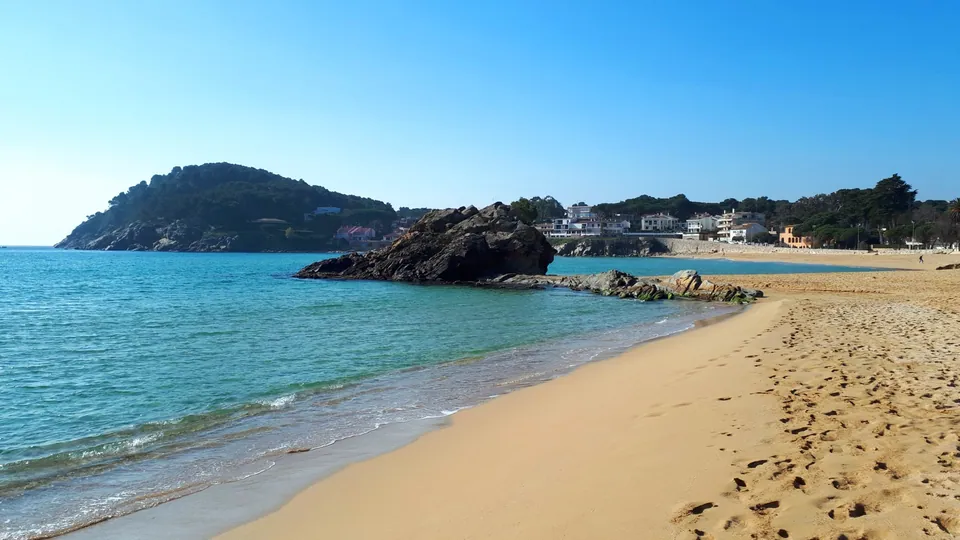
To see several villages without changing accommodation, the best thing is to stay somewhere well placed and head off in a different direction each day. Camping King's is a quiet campsite on the Costa Brava, in La Fosca, 200 metres from the beach. That page also lists more day trips nearby, such as Cap Roig Botanical Garden, the Medes Islands or the ruins of Empúries.
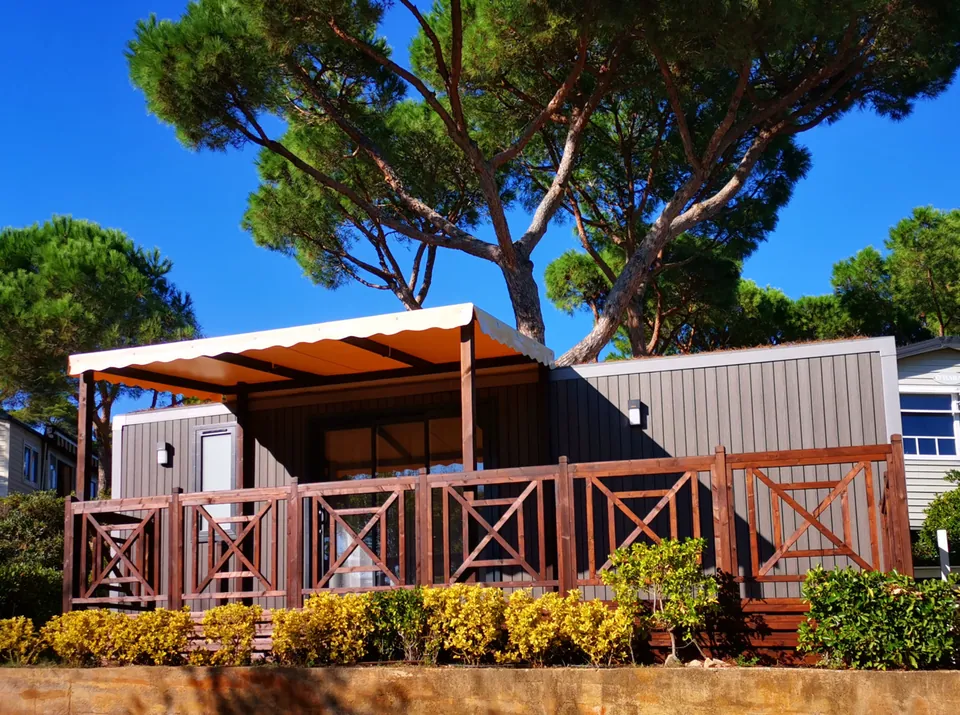
Depending on how you’re travelling, you can choose from a pitch, glamping tent, mobile home or rural room. After a day out, the beach or the pool is only a short walk away.
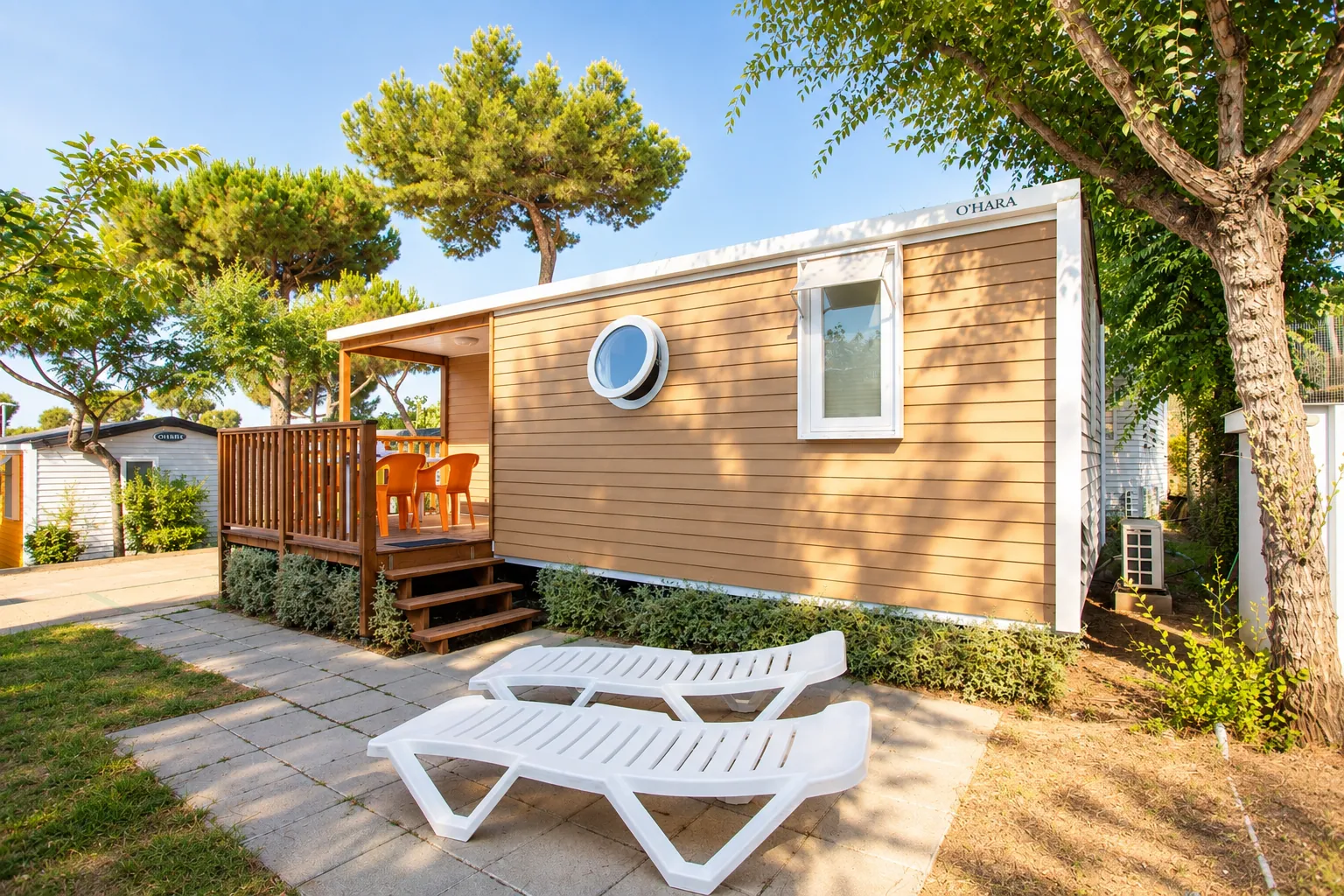
In 2027, the campsite is open from 25 March to 12 September. If you book a stay of 6 or 7 nights or more before 28 February, for dates up to 17 July, early booking gets you a 5 to 10% discount.
If you’re over 60, have a look at the low-season Senior Experience offers: a week in an air-conditioned mobile home from €485, or a pitch with electricity at €26 a night, for two people, excluding public holidays and long weekends. The tourist tax is paid separately.
Frequently asked questions about Costa Brava villages
What are the prettiest villages on the Costa Brava?
Among the best known are Pals, Peratallada and Monells inland, and Calella de Palafrugell, Begur, Tossa de Mar and Cadaqués on the coast. From La Fosca, in Palamós, you can reach most of them in half an hour’s drive or less.
What medieval villages are there near Palamós?
Pals (15 km), Peratallada (21 km), Ullastret (22 km) and Monells (25 km), all in the Baix Empordà and within half an hour’s drive of La Fosca.
Can you visit Pals and Peratallada in one day?
Yes. They’re 8 km apart, about 12 minutes by car. You can add Monells, which is 13 km from Peratallada. Starting and finishing at La Fosca, the whole route is about 62 km.
What is there to see in Pals?
The Gothic quarter, the Torre de les Hores, the church of Sant Pere, the fortified house of Ca la Pruna and the Josep Pla viewpoint, with views of the Montgrí massif and the Medes Islands.
What is there to see in Peratallada?
The moat dug out of the rock, what’s left of the town walls, the keep of the castle (privately owned, so it can only be seen from the outside) and Les Voltes square, with its arcades.
Which villages on the Costa Brava are the least crowded?
Monells and Ullastret tend to be less busy than Pals, Peratallada or Calella de Palafrugell. In all of them, spring and September are quieter than July and August.
Can you walk from Palamós to Calella de Palafrugell?
Yes, along the Camí de Ronda. From La Fosca beach it’s about 7 or 8 km, which takes two to two and a half hours at a good pace.
Where can you stay to visit the villages of the Costa Brava?
At Camping King's, in La Fosca (Palamós), 200 metres from the beach. Calella de Palafrugell is 11 km away and Pals 15 km. It has pitches, glamping tents, mobile homes and rural rooms.