At a glance
- The Camí de Ronda in Palamós runs along the coast from the town’s main beach (Platja Gran) to Cap Roig. From Camping King's, you join it at La Fosca beach, 200 metres away.
- Heading north, it passes S'Alguer, Castell beach and Cala Estreta. It’s 1.1 km from the campsite to Castell and 2.8 km to Cala Estreta (about 40 minutes).
- It’s about 7 or 8 km to Calella de Palafrugell: allow two to two and a half hours at a good pace, without stopping.
- Wear shoes with good grip and take water and sun protection. There are no facilities at Cala Estreta.
- The best times to go are spring and September. In 2027, the campsite is open from 25 March to 12 September.
What the Camí de Ronda is and where it runs in Palamós
The Camí de Ronda, to give it its Catalan name, was the path coastguards used to keep watch for smugglers. Hence the name: “ronda” means a patrol round. Today it’s a coastal path that runs along the clifftops and drops down to the coves, and much of it coincides with the GR 92, the Mediterranean long-distance footpath, which is waymarked in white and red. According to the Camí de Ronda page on Spain’s official tourism website, the best-known linear stretch runs from Sant Feliu de Guíxols to Begur: 43 kilometres, usually walked over two or three days.
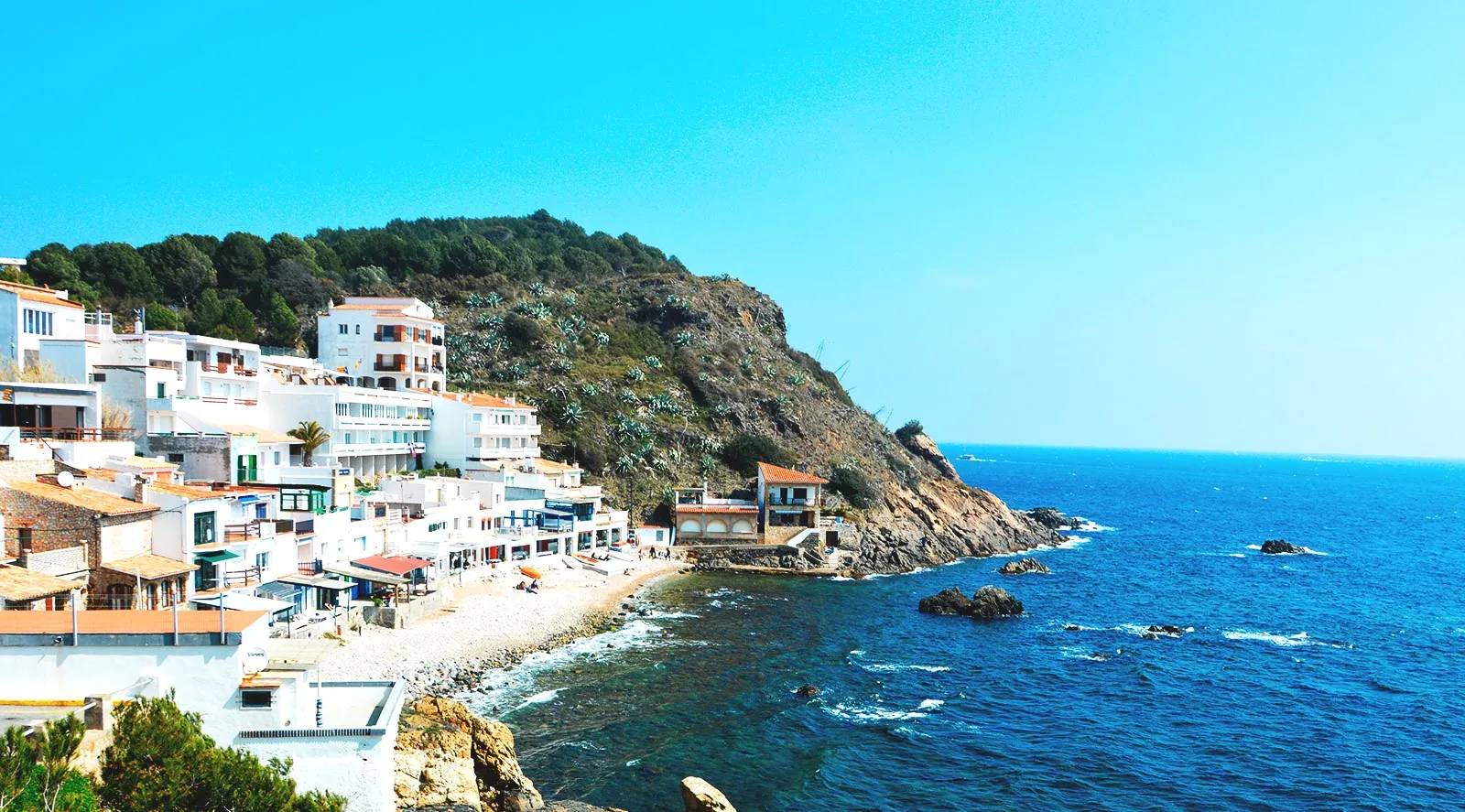
The Palamós tourism website describes the route through the municipality, from the main beach (Platja Gran), next to the town centre, to Cap Roig. It passes the port, the Morro del Vedell cove, Cala Margarida, La Fosca beach, S'Alguer and Castell beach. Camping King's is in between, 200 metres from La Fosca, so you can set off on foot to the north or the south without getting in the car. This table shows the distances from the campsite:
| To | Distance | On foot | What’s there |
|---|---|---|---|
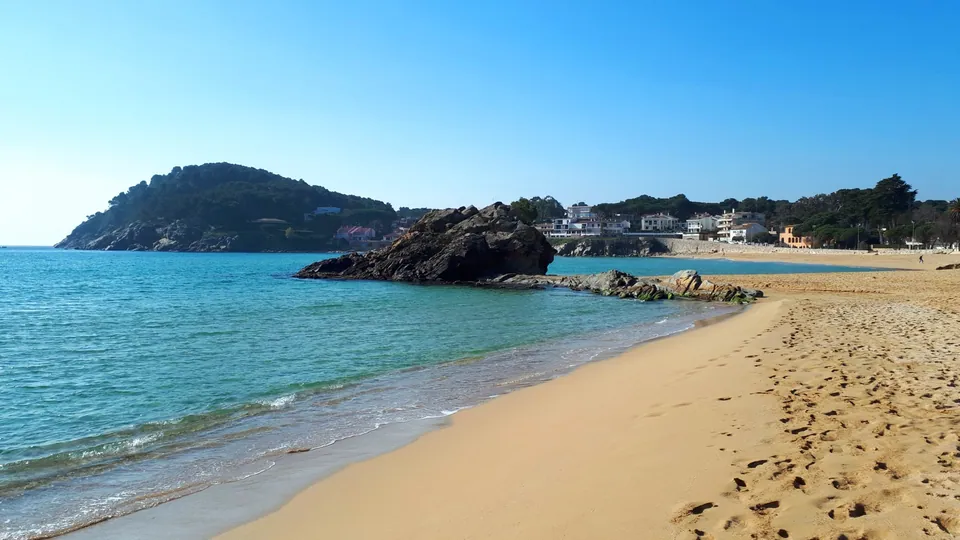
| La Fosca beach | 200 m | 3 min | Fine sand and shallow water |
| Cala S'Alguer | 850 m | 11 min | Fishermen’s huts |
| Castell beach | 1.1 km | 15 min | Undeveloped beach |
| Cala Estreta | 2.8 km | 40 min | Unspoilt cove, no facilities |
| Calella de Palafrugell | 7-8 km | 2-2.5 h | Fishing village |
| Cala Margarida (south) | 1.6 km | 20 min | Cove below Cap Gros |
| Platja Gran (south) | 2.6 km | 33 min | Promenade and port |
These times are for walking without stopping. If you have children with you, or you stop for a swim in the Palamós coves or for photos at every other bend, allow quite a bit longer.
The Camí de Ronda from La Fosca, stretch by stretch
The stretch heading north is the best known in Palamós. As far as Castell it’s a short, easy stroll. From there on, the path heads into the woods and becomes more of a hike.
From La Fosca beach to S'Alguer
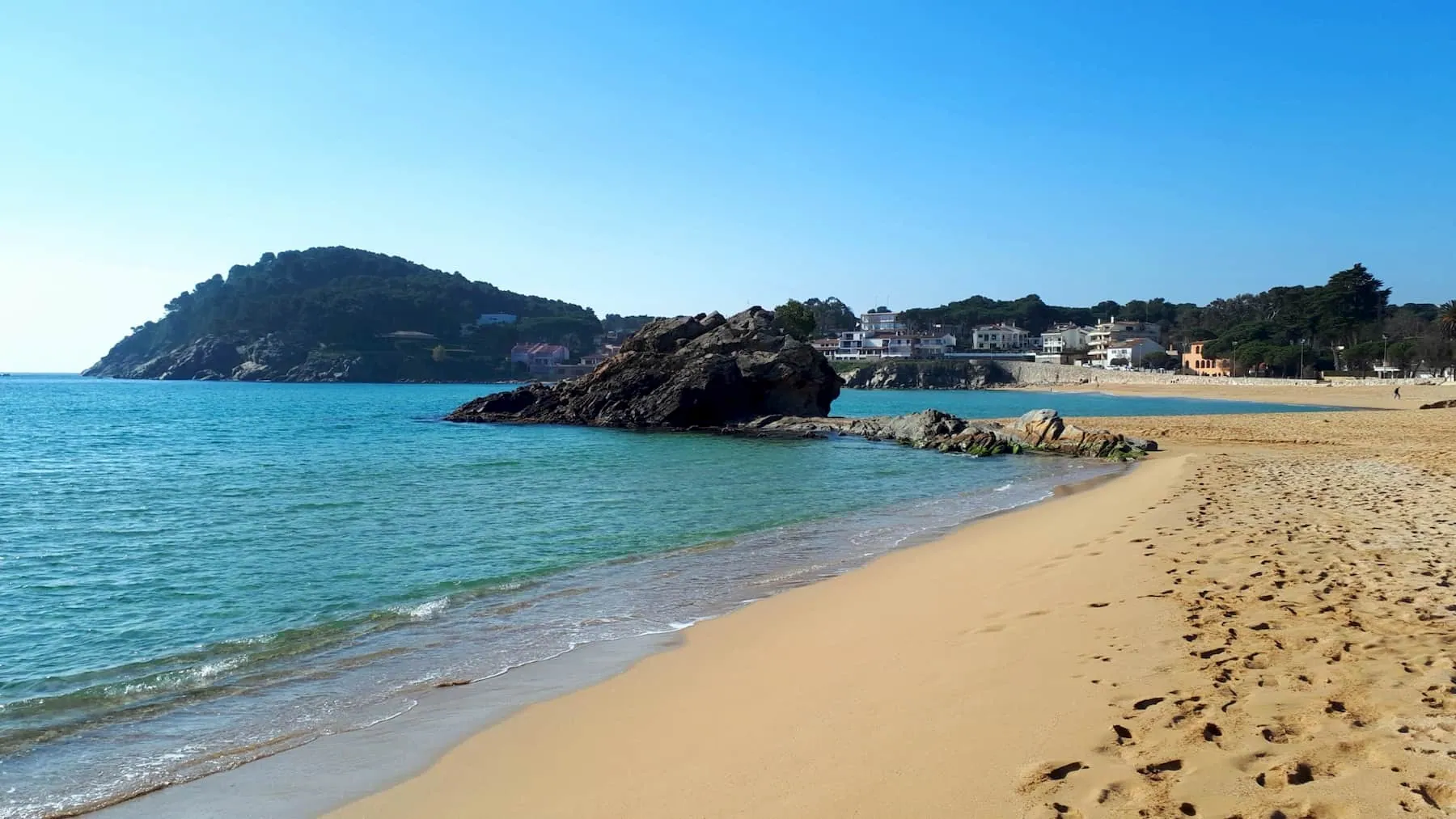
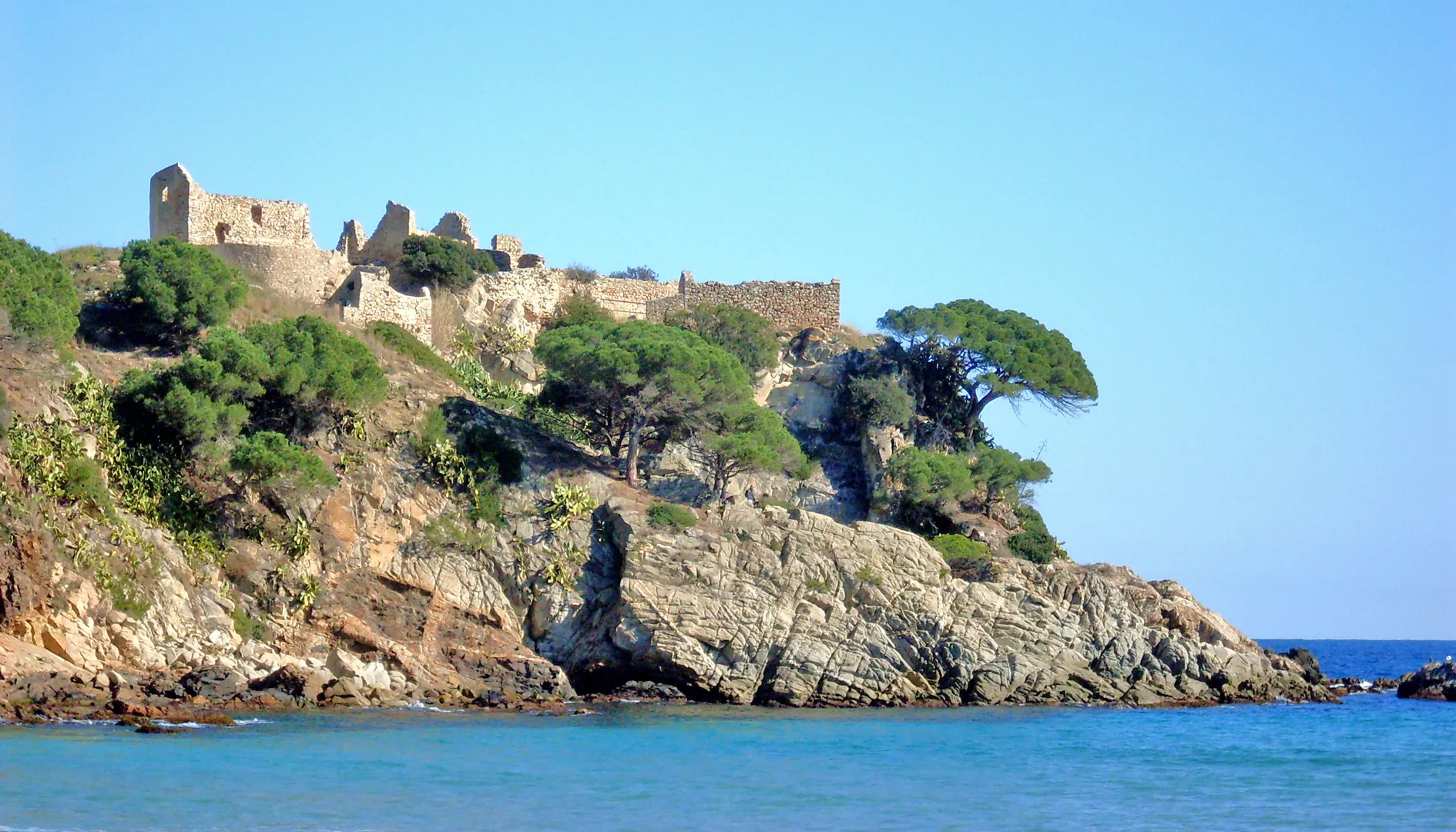
You set off along La Fosca beach, with its fine sand and shallow water, and at the end of the beach the path carries on over the rocks. You’ll soon see the ruins of Sant Esteve de Mar Castle on top of the cliff. It was built between the 12th and 13th centuries, and Palamós traces its origins back to it. Over the years it was turned into a farmhouse. Today, parts of the tower and some walls remain.
S'Alguer and its fishermen’s huts
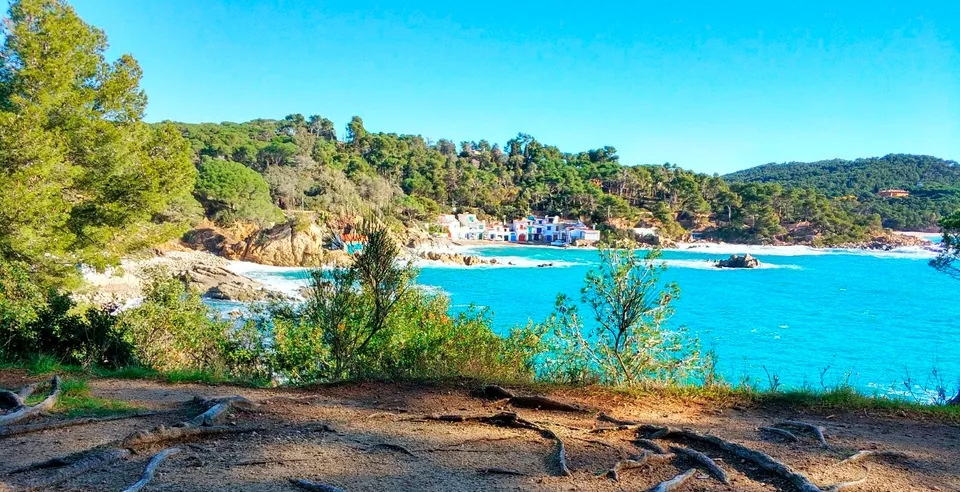
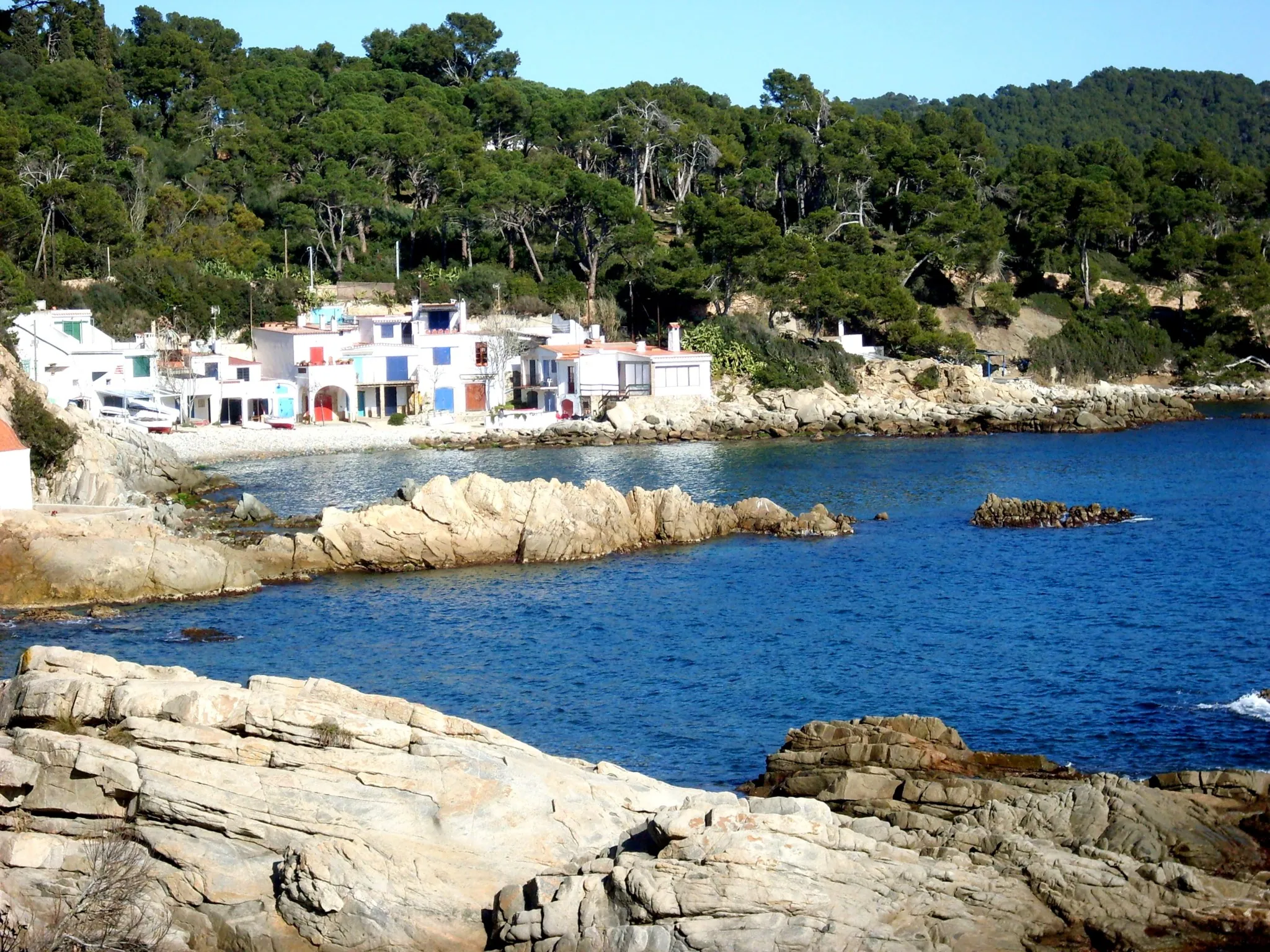
S'Alguer is 850 metres from the campsite, about an eleven-minute walk: a cluster of fishermen’s huts by the water, with their doors painted in different colours. They were used to store boats and fishing tackle, they have stone walls and brick vaults, and the group as a whole dates back to the 15th century. It’s listed as a Cultural Asset of National Interest, and the GR 92 runs just behind it, a little higher up.
The cove is small and the water is very clear. With children, it’s a good spot for the first swim of the day.
Castell beach, the one that was never built on
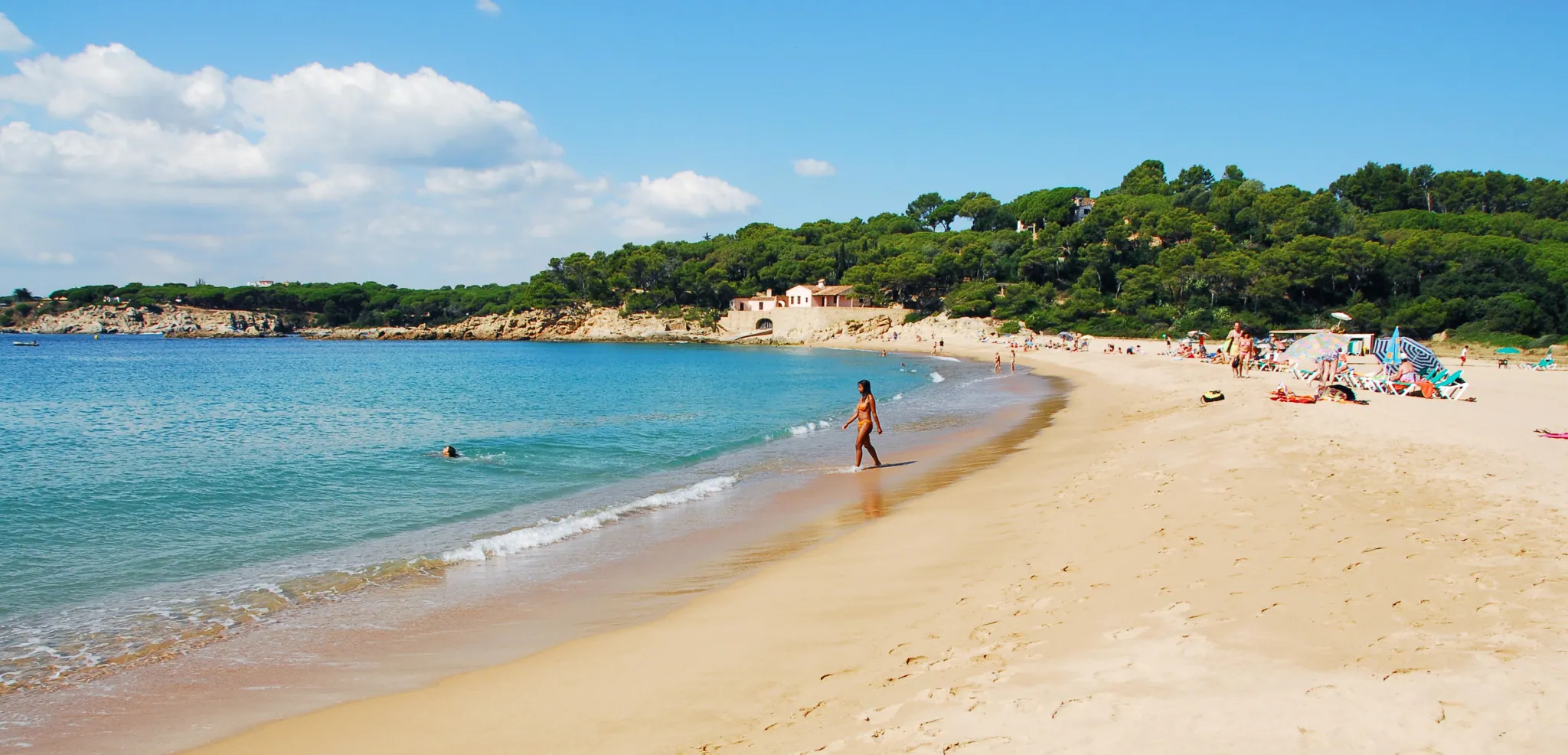
Further along the path, 1.1 km from the campsite, is Castell beach, one of the last undeveloped beaches on the Costa Brava. That’s no accident: in 1994, the people of Palamós voted in a referendum against a plan for housing, a hotel and a golf course next to the beach. Today it lies within the Castell-Cap Roig protected natural area, surrounded by pine trees.
In the bathing season it has a lifeguard, a bar and sun loungers for hire. It’s the last beach with facilities on the way to Calella: if you’re going further, buy any water you still need here.
The Castell Iberian Settlement and Dalí’s hut
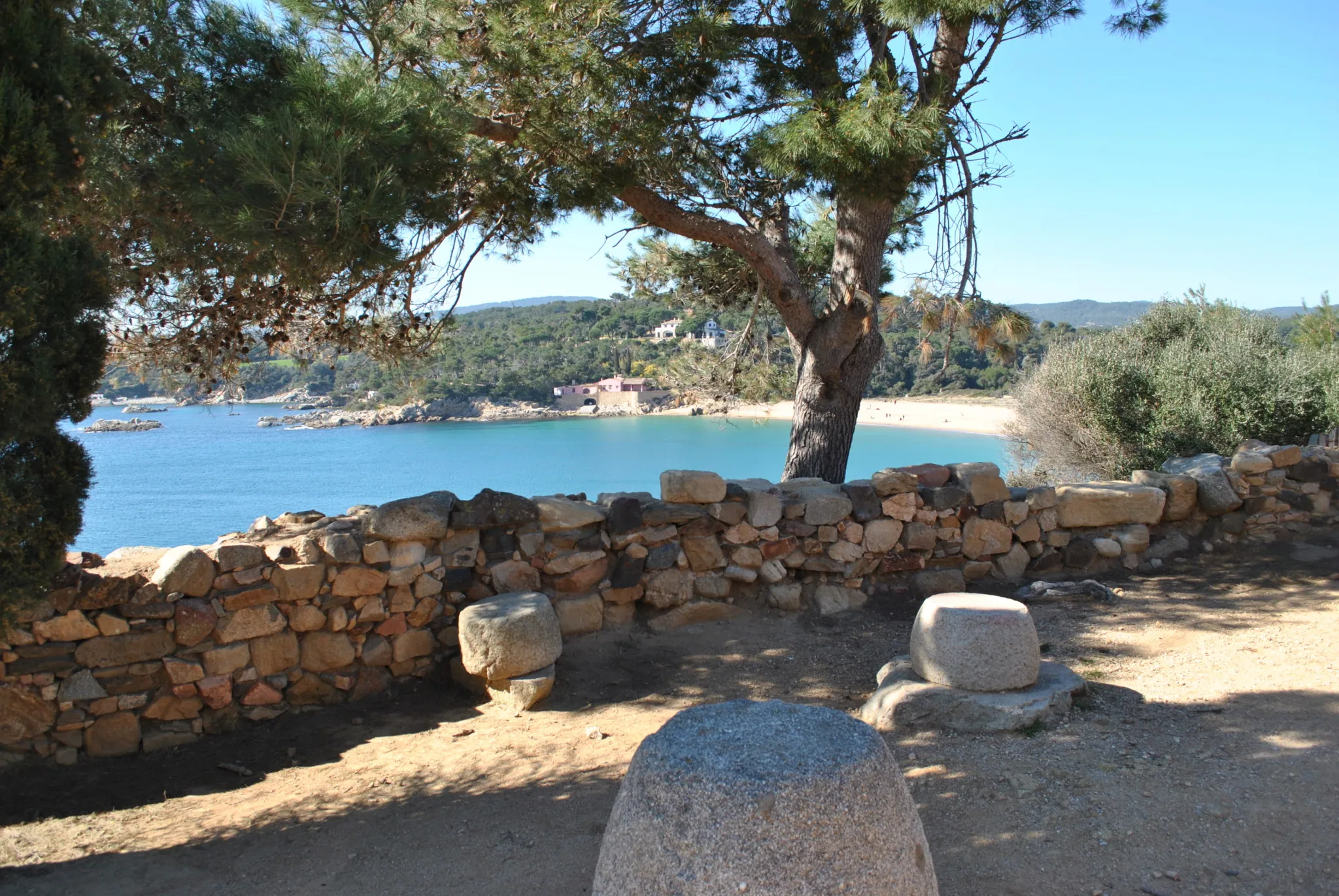
On the headland at the end of the beach is the Castell Iberian Settlement. It was home to the Indigetes from the 6th century BC until Roman times, and it’s the most important Indigete settlement in Catalonia after Ullastret. Remains of the town wall, houses and streets, cisterns and silos have survived, and from up there you can see the whole beach.
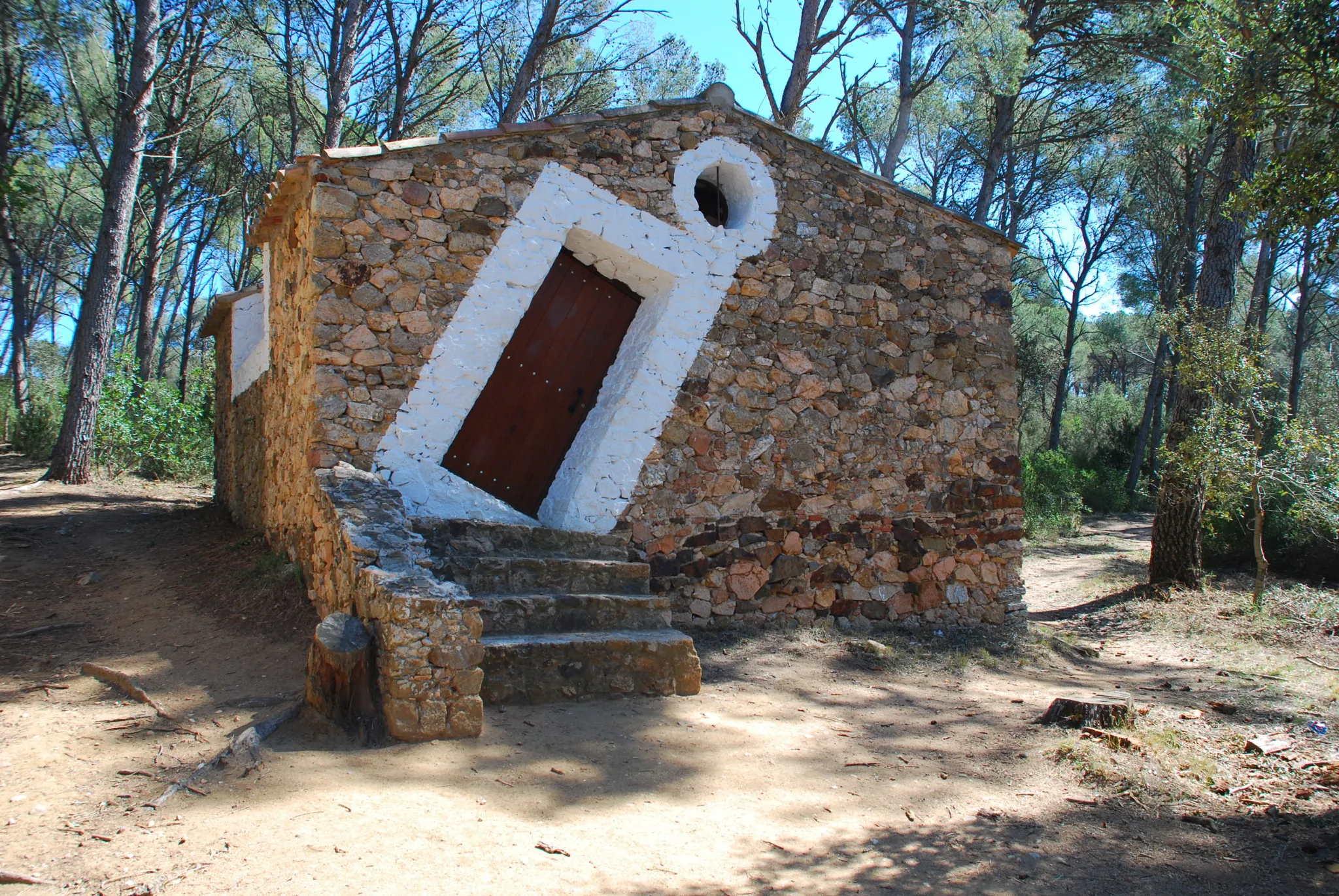
Also near the beach is the Barraca de Dalí, a small stone hut that was given to the painter as a studio. It’s empty now and can only be seen from the outside. On our surroundings page, you’ll find other places to visit nearby, such as the Fishing Museum in Palamós or Vila-Romà Castle.
From Castell to Cala Estreta
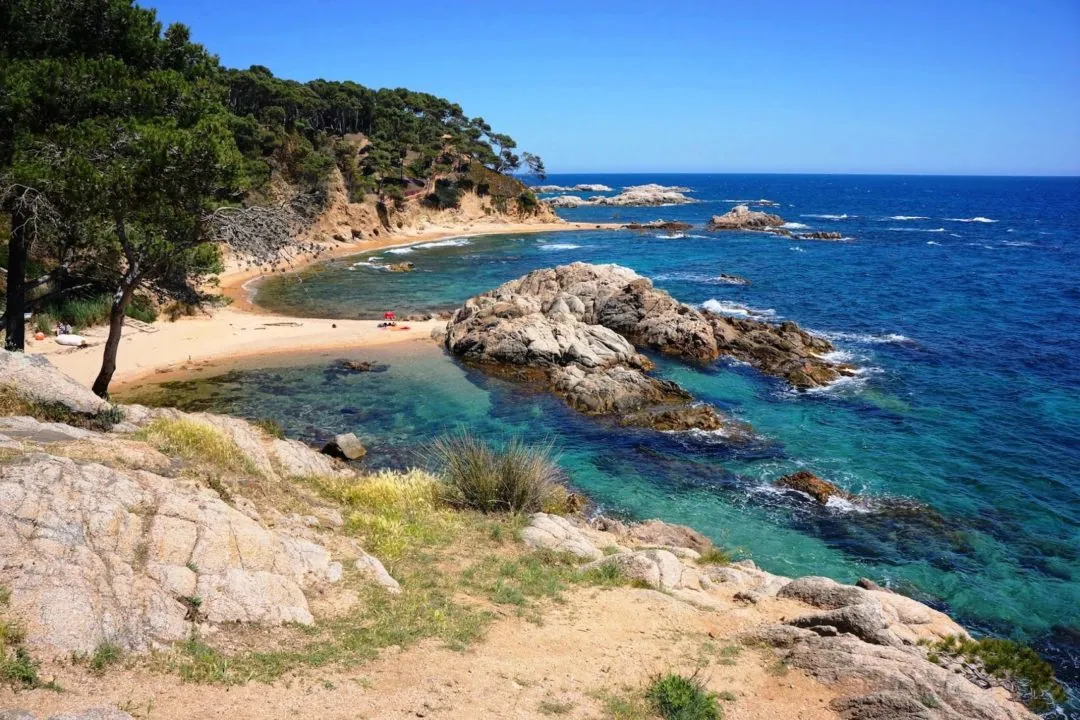
After Castell, the path changes. It heads into the pine woods, goes up and down, and in places it’s narrow and stony. Cala Estreta is 2.8 km from the campsite, about a 40-minute walk. It’s an unspoilt cove surrounded by cliffs, much loved throughout the area, and you can only reach it on foot or by boat.
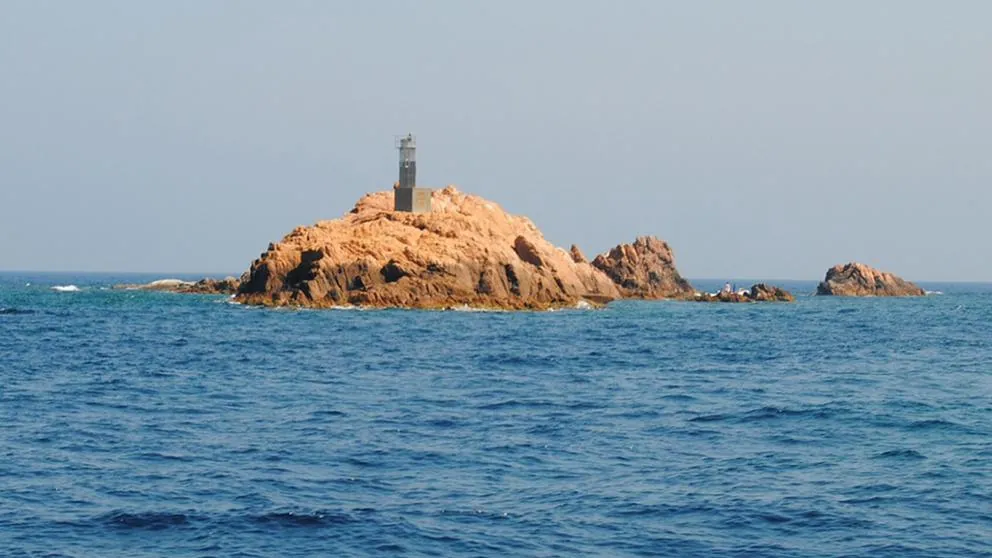
There’s no bar or lifeguard at the cove, so bring water and something to eat. Out to sea, just over a kilometre away, you can see the Formigues Islands, a group of islets that form part of a protected natural area.
Tip: if you want to walk to Calella and back on the same day, set off early. The round trip is about 15 kilometres, not counting stops for a swim.
On to Cap Roig and Calella de Palafrugell
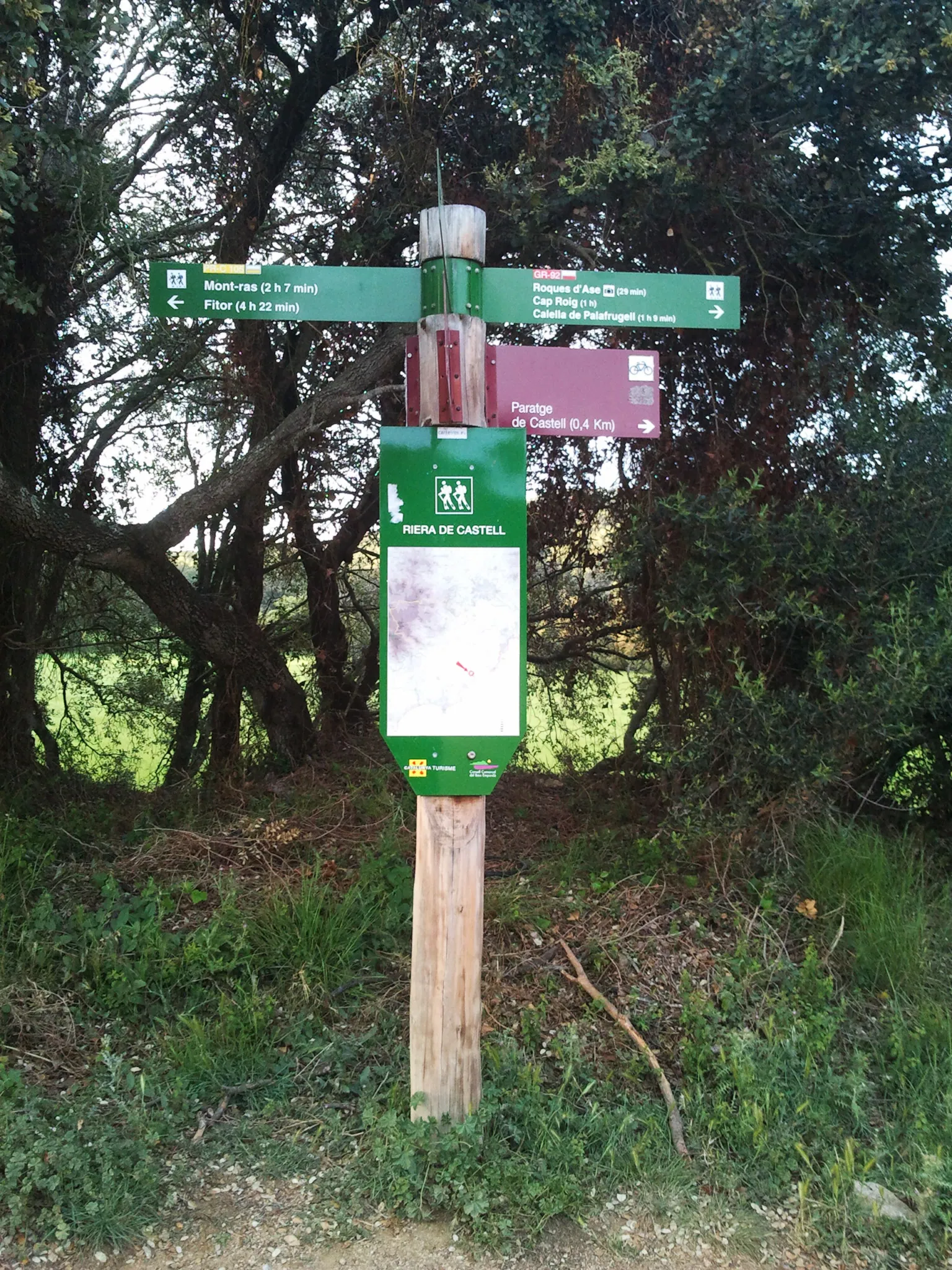
From Castell, the GR 92 carries on through pines and cork oaks towards Calella de Palafrugell. At the Castell stream (riera de Castell), the signs give 1 hour to Cap Roig and 1 hour and 9 minutes to Calella. Counting from La Fosca, it’s about 7 or 8 kilometres, depending on the route you take: two to two and a half hours at a good pace, without stopping.
Before Calella you pass Cap Roig, with its castle and botanical garden, which has nearly 1,000 plant species and its own opening hours. Calella de Palafrugell is an old fishing village with small beaches and boats on the sand, and a good place to stop for something to eat before heading back.
To get back, you have two options: walk back the way you came, or return from Calella by bus, changing in Palafrugell, or by taxi. Check the timetables before you set off, especially out of season.
Heading south: Cala Margarida and the port of Palamós
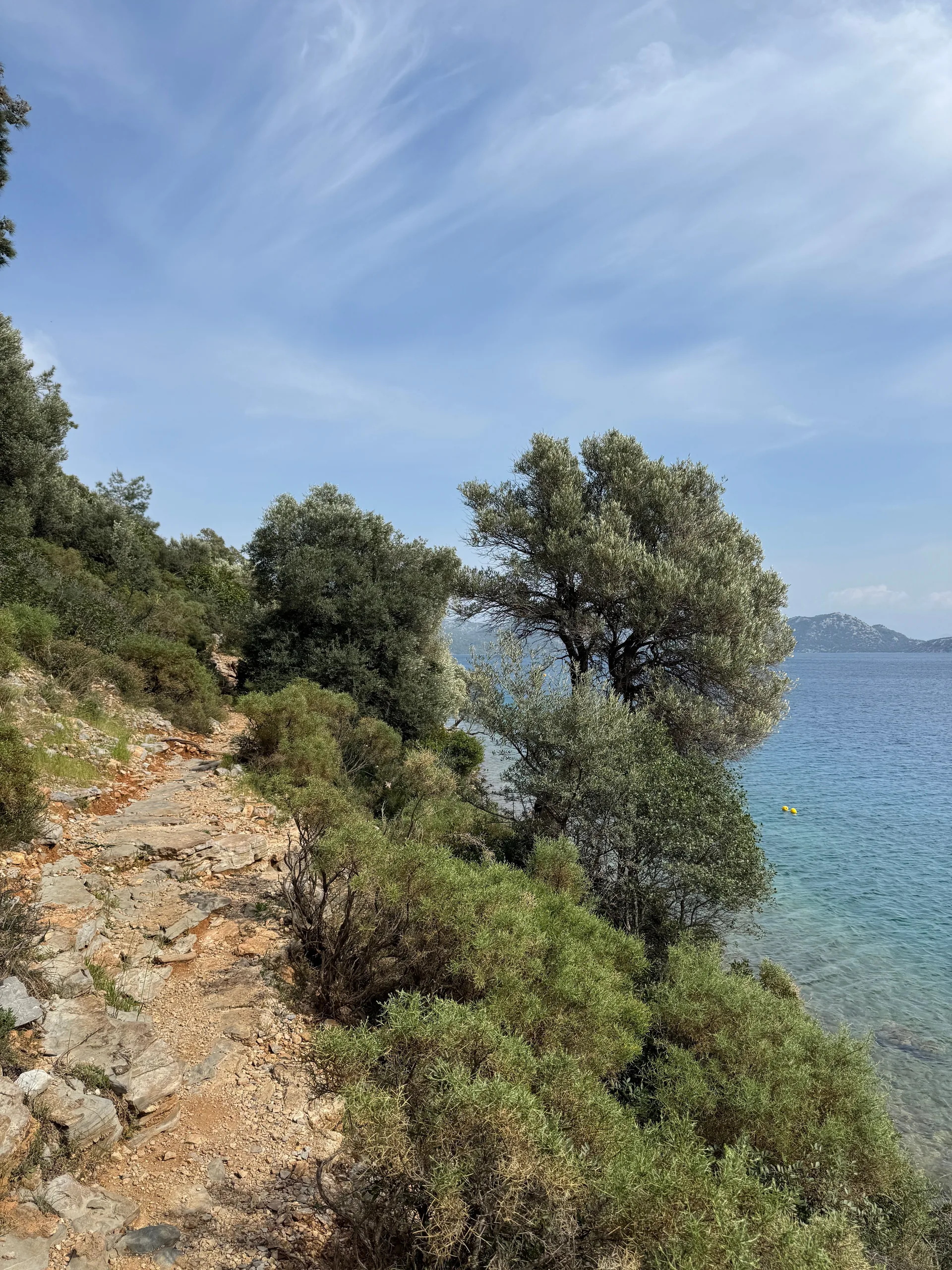
If you’d rather go for a shorter walk, head south. Cala Margarida, below Cap Gros, is 1.6 km from the campsite, about 20 minutes away. You get down to it by a flight of steps, and it’s known for its views and its seabed, which you can see clearly with a snorkelling mask. Carry on and you come to the marina and the Morro del Vedell cove (2.5 km), and then the Platja Gran, Palamós main beach (2.6 km, about 33 minutes), with the seafront promenade and the town.
From the Platja Gran, the path continues along the cliffs towards Sant Antoni de Calonge and Platja d'Aro, if you’re still up for more. And if you’d like to see these coves from the water, our activities nearby page has kayaking, snorkelling and diving.
The Camí de Ronda with kids: the easiest stretch
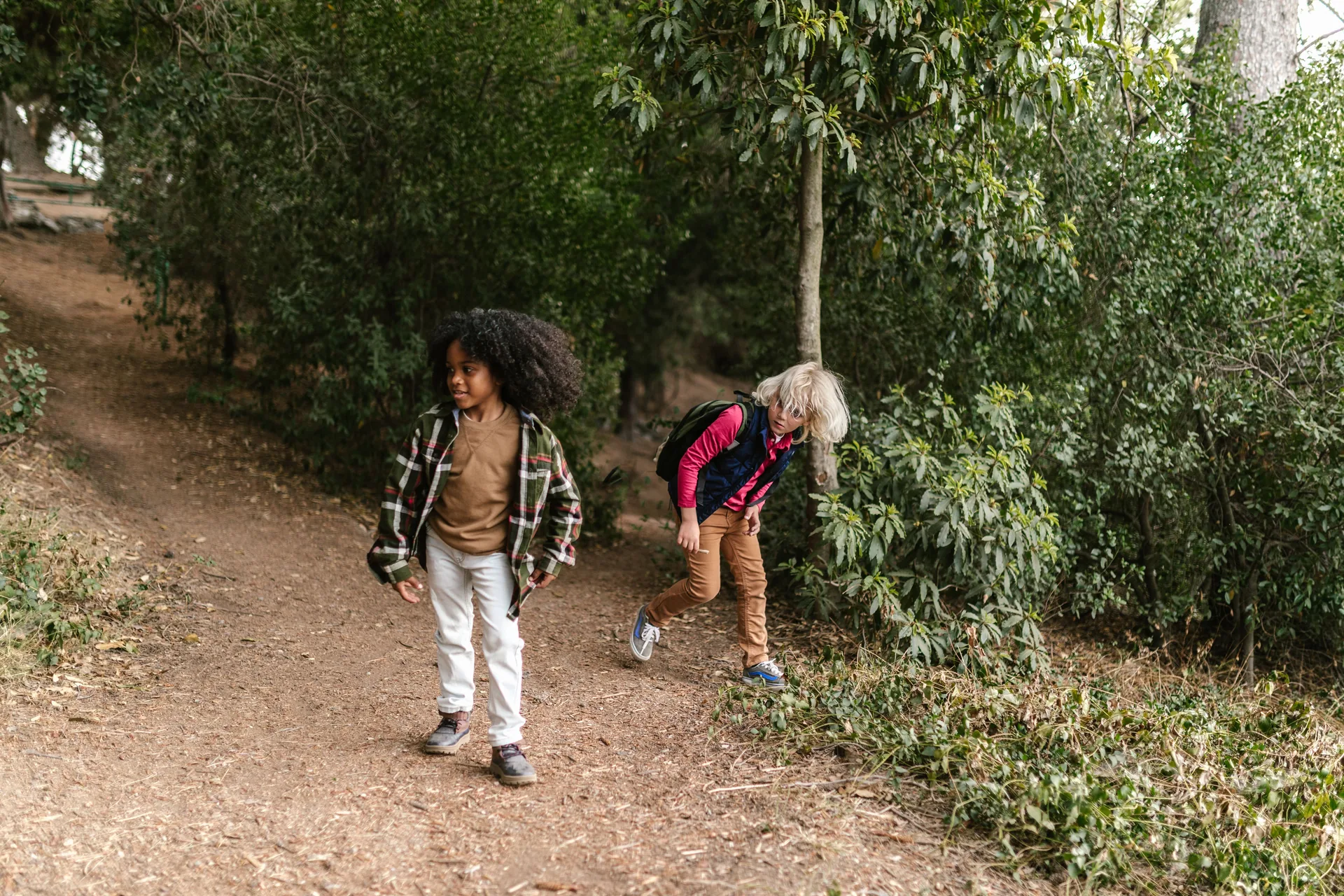
If you’re walking the Camí de Ronda with kids, the best stretch is from La Fosca to Castell: 1.1 km, about 15 minutes, with two places to swim along the way and the Iberian settlement at the end. If they get tired, the campsite is close by.
Children who are already good walkers can manage the walk to Cala Estreta, but there are climbs, descents and stones. Take plenty of water, something to eat and closed-toe shoes rather than flip-flops. With little ones, a baby carrier will be more use than a pushchair, which can’t cope with the stony stretches.
A plan for a summer’s day: set off at nine, have a swim at S'Alguer, climb up to the Iberian settlement and head back to the campsite for lunch. In the afternoon, the pool.
Tips for walking the Camí de Ronda
What to take
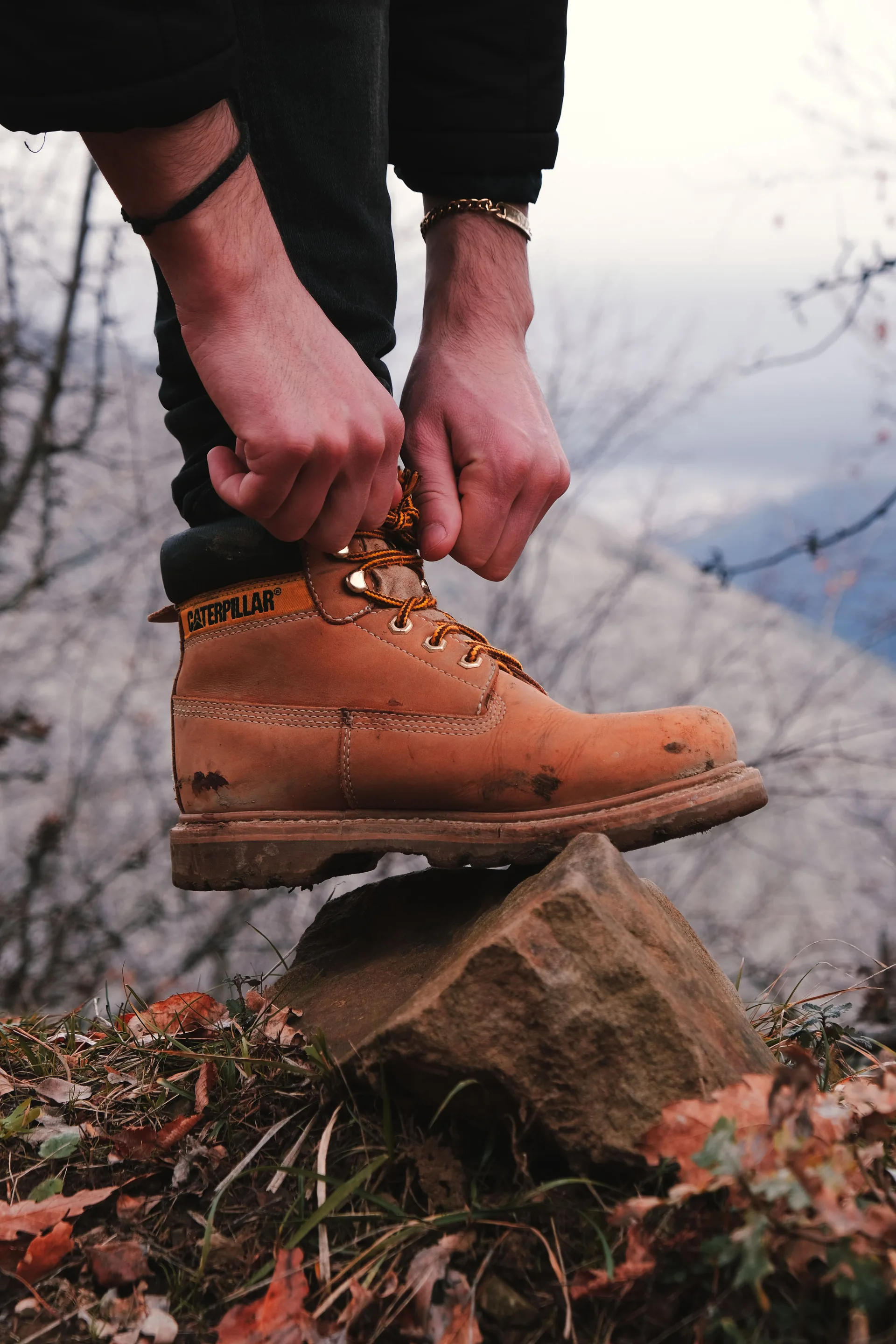
- Shoes with soles that grip, such as trail shoes. In flip-flops, you’ll slip on the rocks.
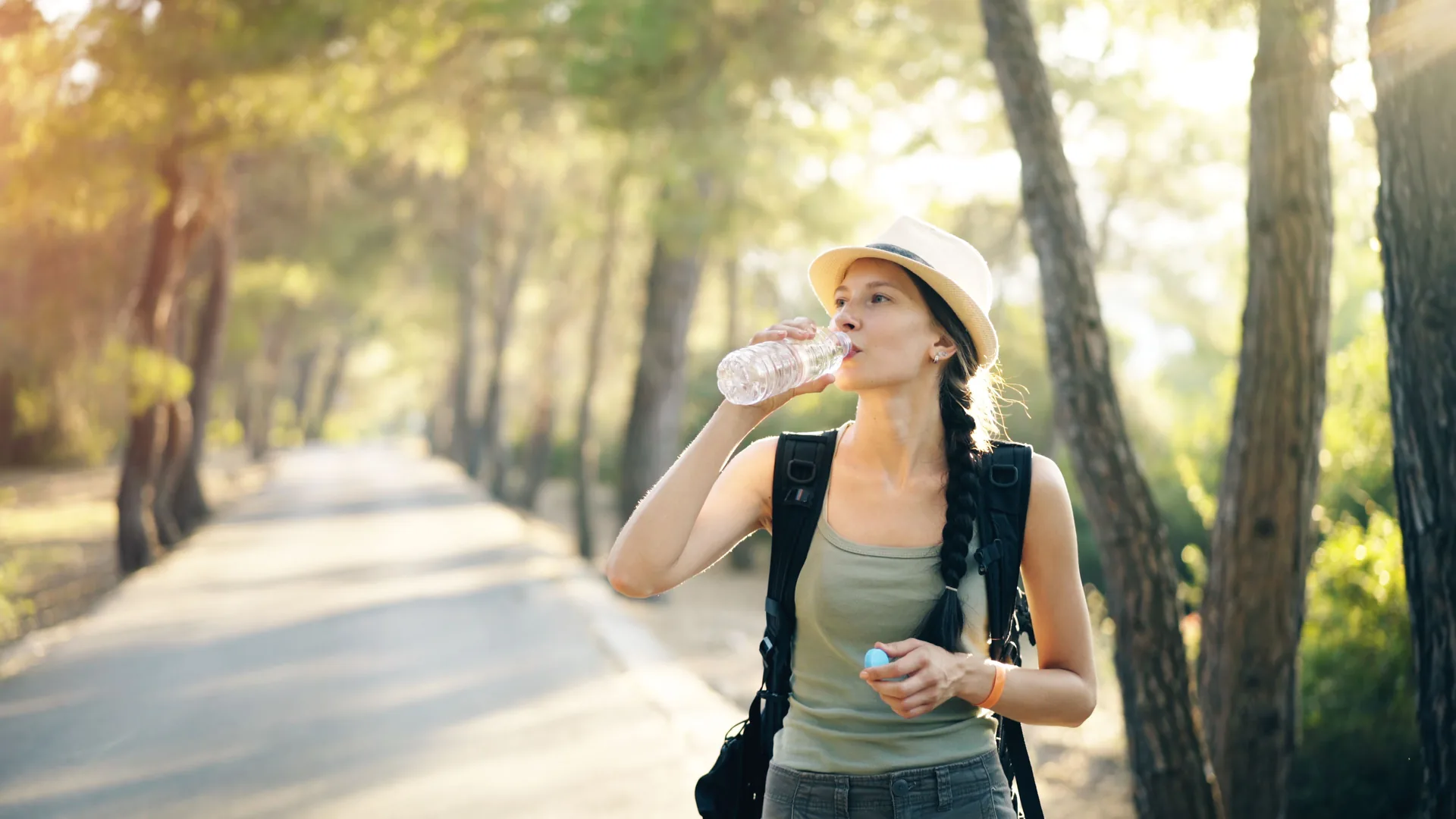
- Water, especially in summer. Beyond Castell, there’s nowhere to buy it until Calella.
- A cap, sun cream and something to eat.
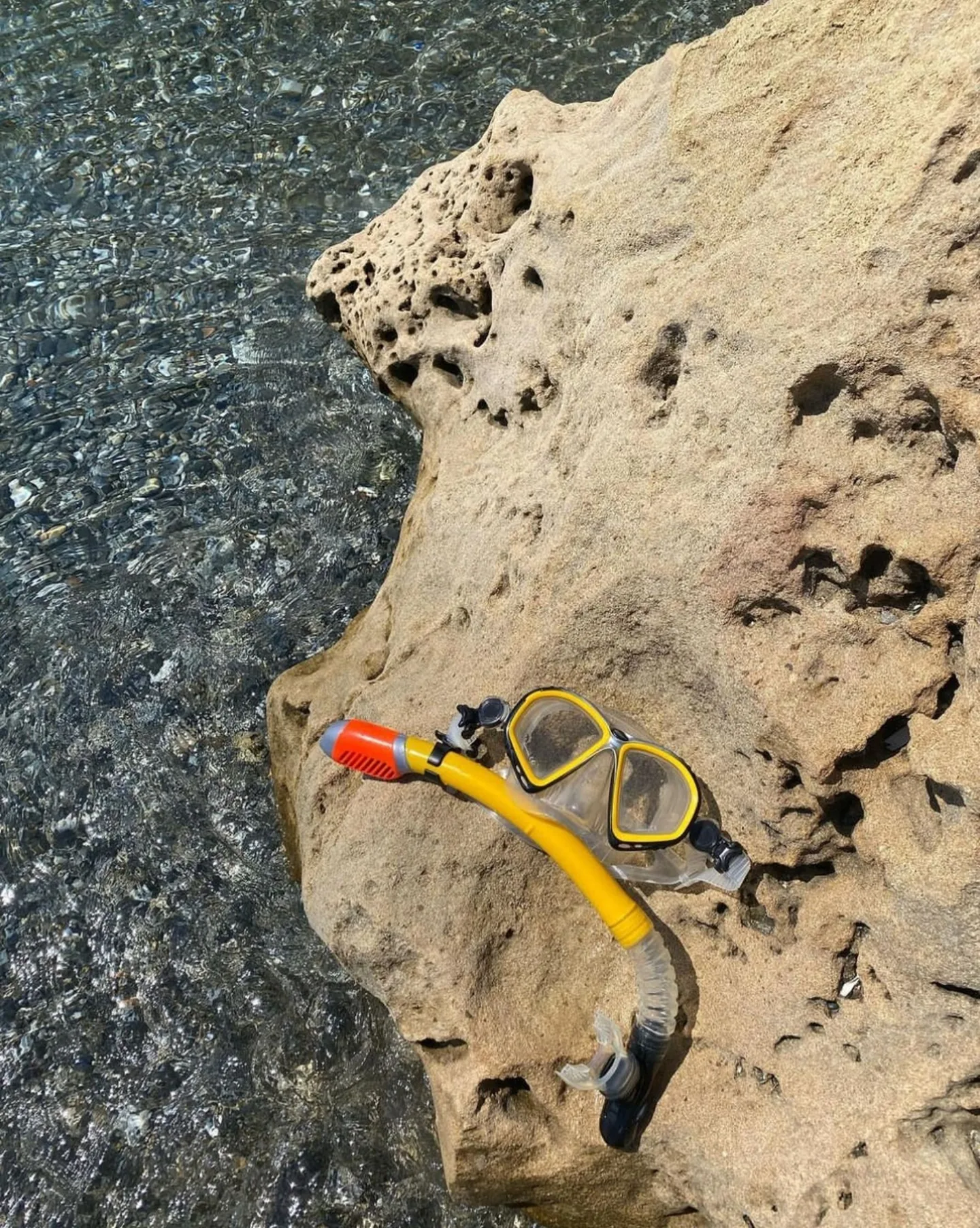
- Swimwear, a small towel and, if you like watching fish, a mask and snorkel.
- A bag to take your rubbish back with you.
Heat, signs and rules
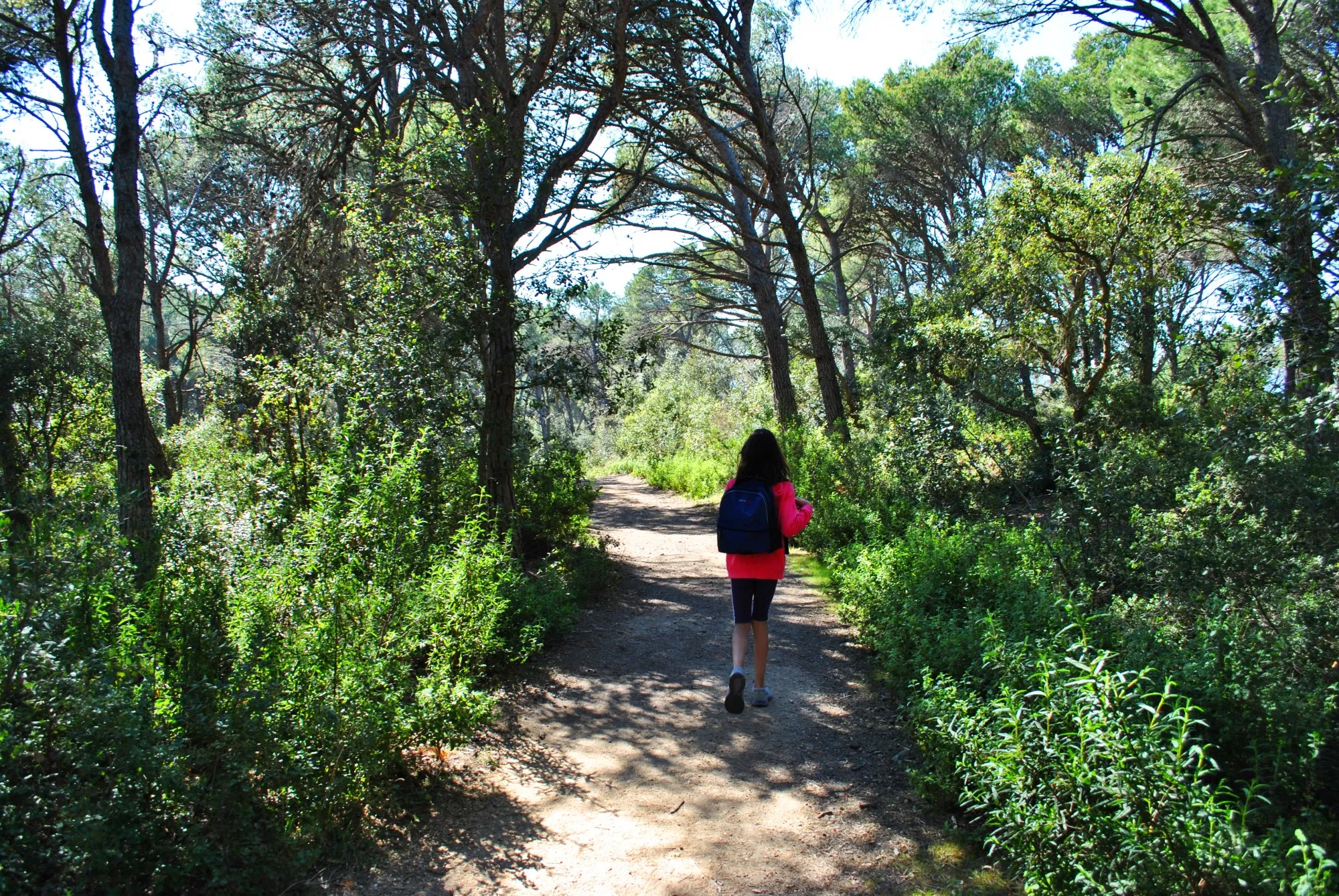
In July and August, set off before ten or late in the afternoon. There’s shade in the pine woods, but the rocky stretches get very hot. The white and red waymarks of the GR 92 will guide you, and at some junctions there are signposts with walking times.
On days with a high risk of fire, the Generalitat, Catalonia’s government, activates the Pla Alfa and may close access to some natural areas. If you’re walking the woodland stretches in the height of summer, check before you go. Throughout the Castell-Cap Roig protected area: no fires, take your rubbish away with you and always stay on the path.
With a dog
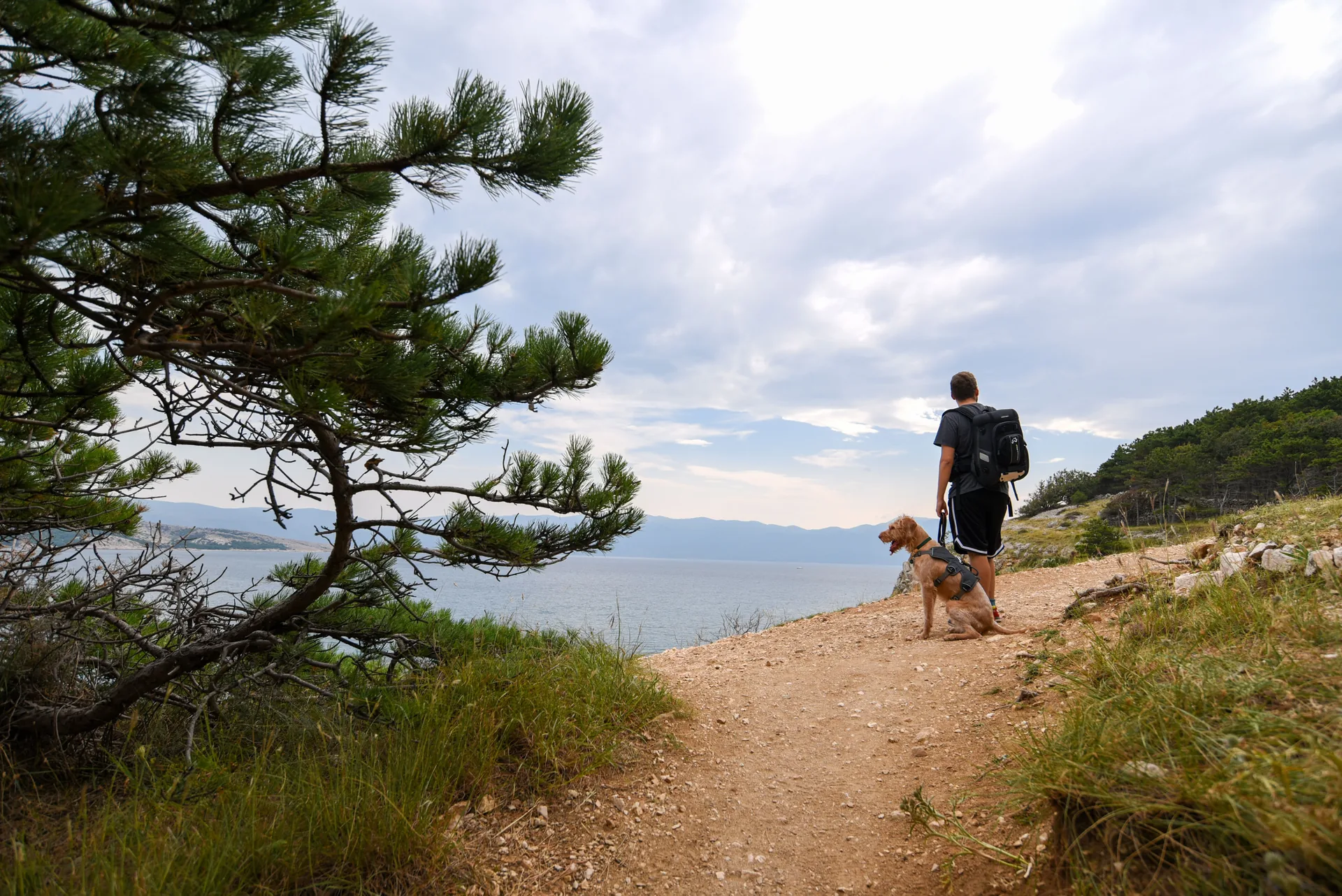
Dogs can walk the path with you, preferably on a lead, but in Palamós they aren’t allowed on the beaches or in the coves at any time of year. The exceptions are Pere Grau beach, next to the port’s breakwater, and, out of season, part of the main beach (Platja Gran). At the campsite, dogs are allowed on the pitches and in the Pet Friendly mobile homes.
When to walk the Camí de Ronda
Spring and September are the best times for hiking on the Costa Brava: it isn’t as hot, there are fewer people on the path and in September the sea is still good for a swim. Summer works too, if you set off early and make the most of the coves to cool off. In 2027, Camping King's is open from 25 March to 12 September, so you can come from Easter onwards.
If you’re over 60, have a look at the low-season Senior Experience offers. A week in an air-conditioned mobile home costs €485 from 23 April to 30 May 2027, and €525 from 31 May to 13 June. A pitch with electricity is €26 a night from 2 April to 17 June and from 25 August to 12 September. They’re for two people, aren’t valid on public holidays or long weekends, and the tourist tax is paid separately.
Where to stay when walking the Camí de Ronda
To walk the path in stretches without a car, it’s easiest to stay right next to it. Camping King's is a campsite near the beach on the Costa Brava: it’s 200 metres from La Fosca, where the Camí de Ronda passes. You can do a different stretch each day and come back for lunch, the pool or a rest.
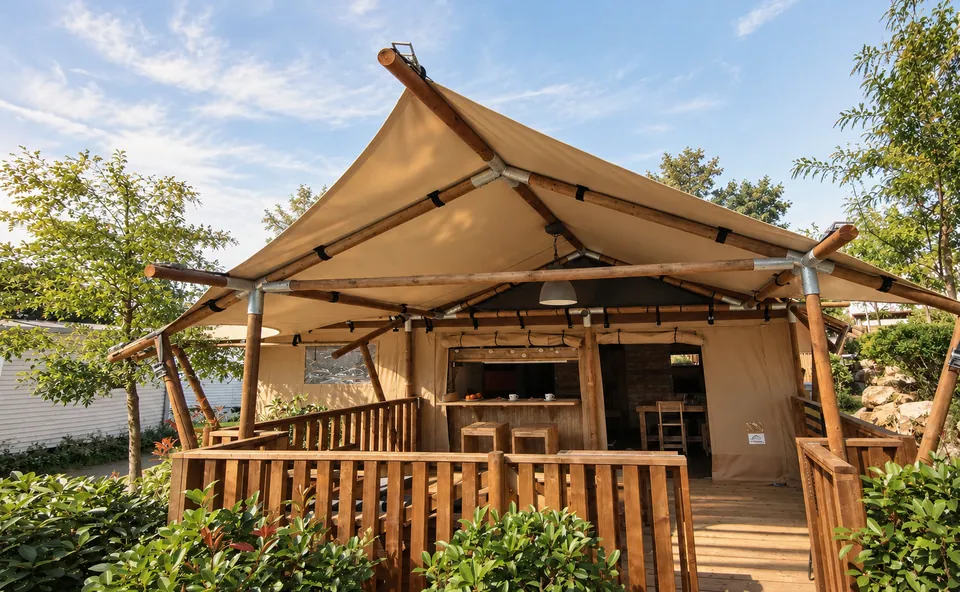
You can stay on a pitch with your own tent, caravan or motorhome, in a glamping tent, in a mobile home or in a rural room. If all you want is a comfortable bed after a day’s walking, the rural rooms have air conditioning, a TV and a bathroom with a shower and hairdryer, and sheets and towels are included.
In low season, and subject to availability, you can ask at reception for a late check-out, which lets you keep your accommodation until 19:00, for an extra charge. That gives you time to walk one last stretch on the day you leave.
And if you book a stay of 6 or 7 nights or more before 28 February, for dates up to 17 July, early booking gets you a 5 to 10% discount. Your booking is confirmed with a 30% deposit.
Frequently asked questions about the Camí de Ronda in Palamós
Where does the Camí de Ronda start in Palamós?
It starts at Palamós main beach (Platja Gran), next to the town centre, and follows the coast to Cap Roig. From Camping King's, you join it at La Fosca beach, 200 metres away: heading north, it goes to S'Alguer, Castell and Cala Estreta, and heading south, to Cala Margarida and the port.
How long does it take to walk from La Fosca to Calella de Palafrugell on the Camí de Ronda?
It’s about 7 or 8 kilometres, depending on the variant you take. At a good pace and not counting stops, it takes two to two and a half hours. At the Castell stream, the GR 92 signs give 1 hour and 9 minutes to Calella.
How do you get to Cala Estreta?
On foot, along the Camí de Ronda from Castell beach, or by boat. From Camping King's it’s 2.8 km, about a 40-minute walk. The last stretch runs through pine woods, with ups and downs, and there’s no bar or lifeguard at the cove.
Is the Camí de Ronda in Palamós difficult?
From La Fosca to Castell it’s a 1.1 km stroll. After Castell there are climbs and descents, roots and stones, and some narrow stretches. It isn’t a technical path, but you should wear shoes with good grip and take water.
Can you walk the Camí de Ronda with kids?
Yes. The stretch from La Fosca to Castell is short, has coves for a swim and ends at the Iberian settlement. Children who are already good walkers can go as far as Cala Estreta. With babies, a baby carrier is better than a pushchair, which can’t get over the stones.
Can you walk the Camí de Ronda in Palamós with a dog?
On the path, yes, preferably with your dog on a lead. What you can’t do in Palamós is take it onto the beaches or into the coves at any time of year, except at Pere Grau beach and, out of season, on part of the main beach (Platja Gran).
When is the best time to walk the Camí de Ronda?
Spring and September, because it’s cooler and there are fewer people about. You can walk it in summer too if you set off early or late in the day and make the most of the coves to cool off. In 2027, Camping King's is open from 25 March to 12 September.
Where can you stay near the Camí de Ronda in Palamós?
At Camping King's, 200 metres from La Fosca beach, where the path passes. It has pitches, glamping tents, mobile homes and rural rooms, and in low season there are Senior Experience offers for over-60s.